How Career OS™ Works
One Career OS™. Two governed pathways. This page explains the method itself: how a career problem is diagnosed, how direction is decided, and how that decision is then executed either as an external move or as progression inside your current organisation.
Both pathways share the same discipline — diagnosis, positioning, evidence, execution and conversion or progression. They use different tools because external career change and internal career progression are genuinely different problems.
Where do I start?
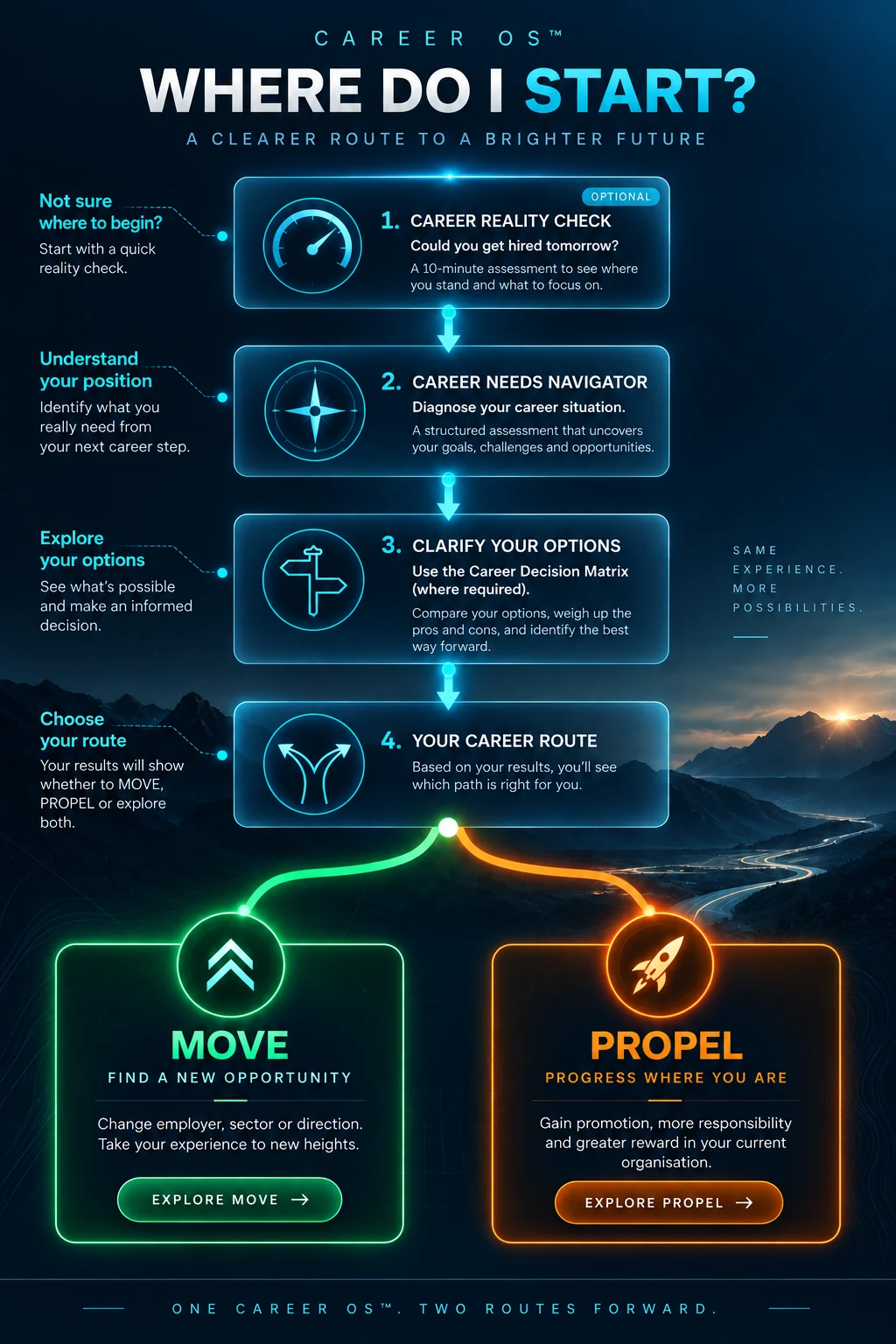
Career OS™ always starts with an honest reality check rather than a CV rewrite. You establish what is actually happening in your career now, what you want the next stage to deliver, and which constraints are real.
The Career Needs Navigator then clarifies your options and routes you to one of the two pathways: MOVE if progression requires an external change, PROPEL if progression can be built where you already are.
Read the Career OS™ overview or start with the free Career OS™ tools.
How do I determine the right career direction?
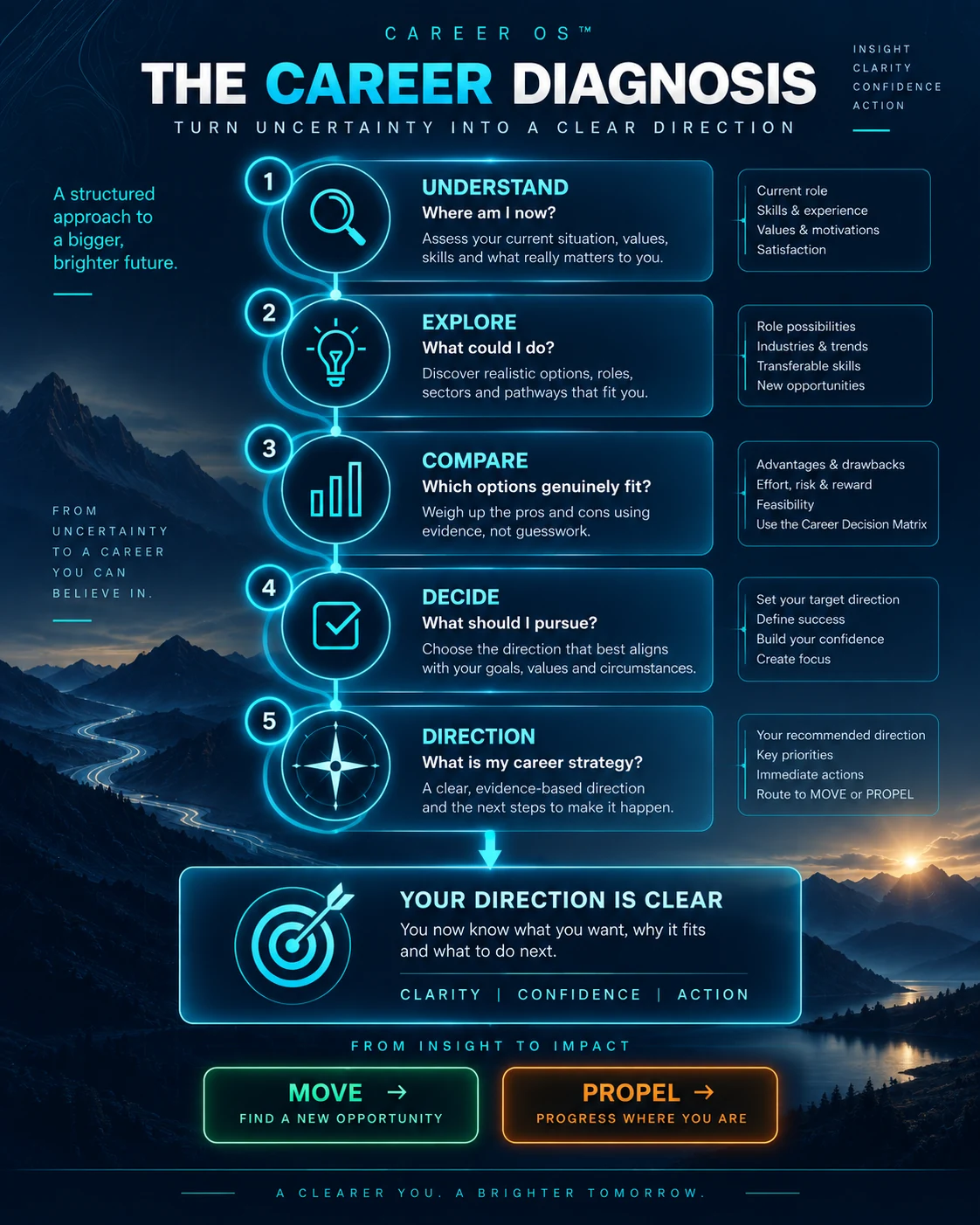
The Career Diagnosis works in a fixed sequence: Understand your current position, Explore credible options, Compare them against criteria that matter, Decide, and commit to a Direction that can be executed.
Direction is treated as a decision to be evidenced, not a feeling to be discovered. That is why comparison and decision criteria come before positioning or applications.
How do I successfully move to a new opportunity?
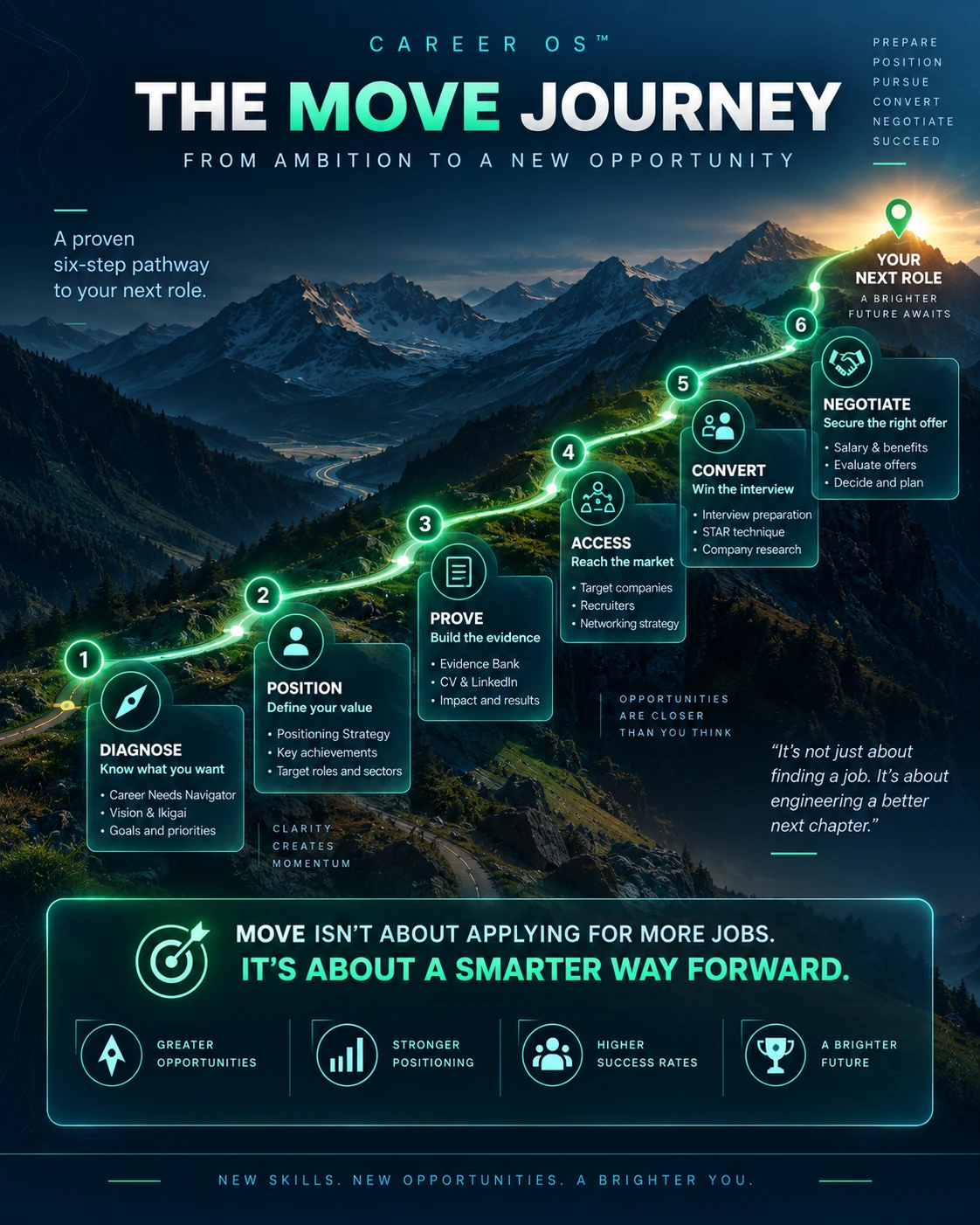
MOVE is the external pathway: Diagnose, Position, Prove, Access, Convert, Negotiate — ending in the next role. Each stage produces something the market can act on, from a recognised target position through to evidence, warm access, interview conversion and a negotiated offer.
How do I progress where I already am?
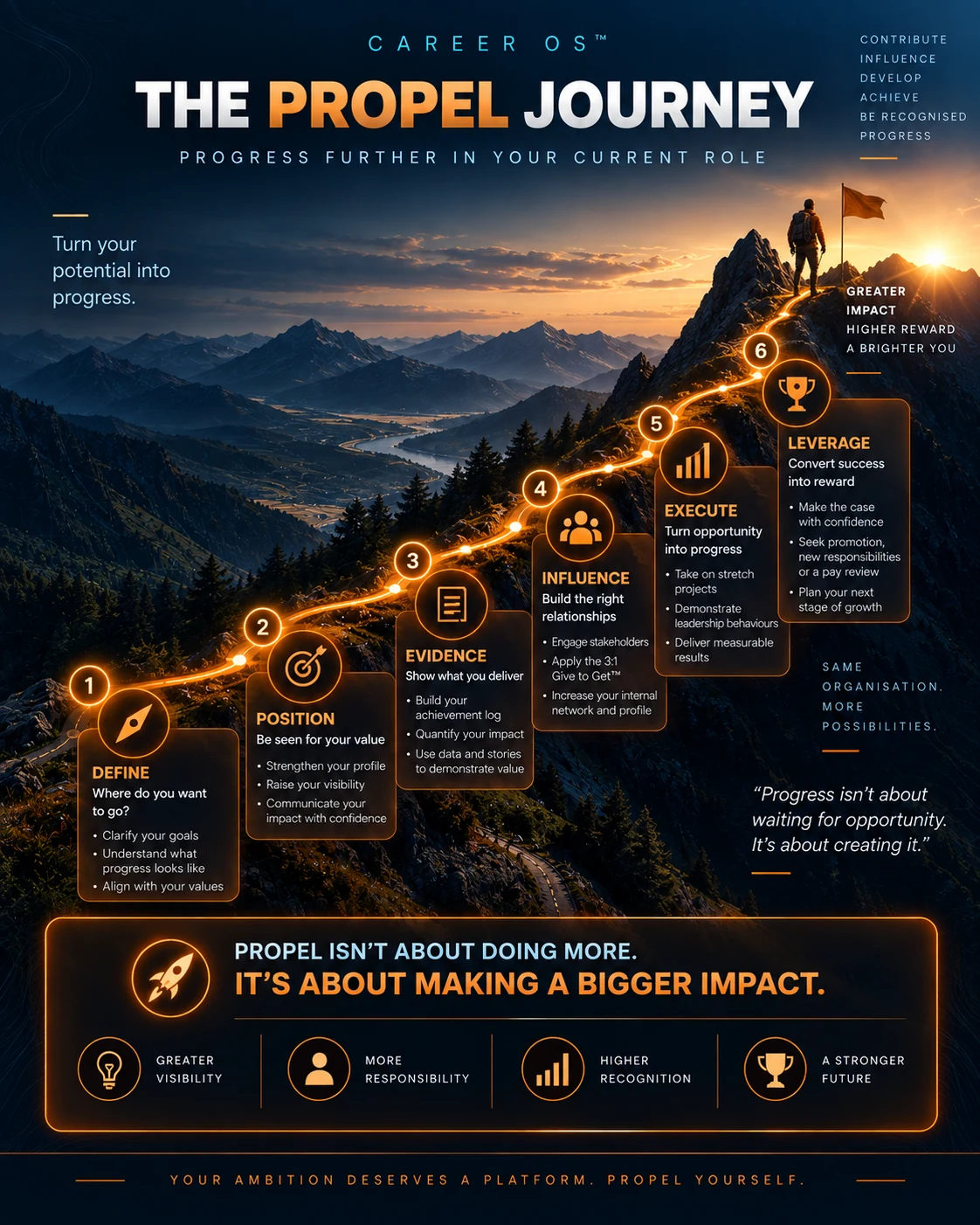
PROPEL is the internal pathway: Define, Position, Evidence, Influence, Execute, Leverage — ending in progression. The environment is stakeholders, sponsorship and organisational priorities rather than the open market, so the evidence and influence work carries most of the load.
How do I manage all of this in one system?
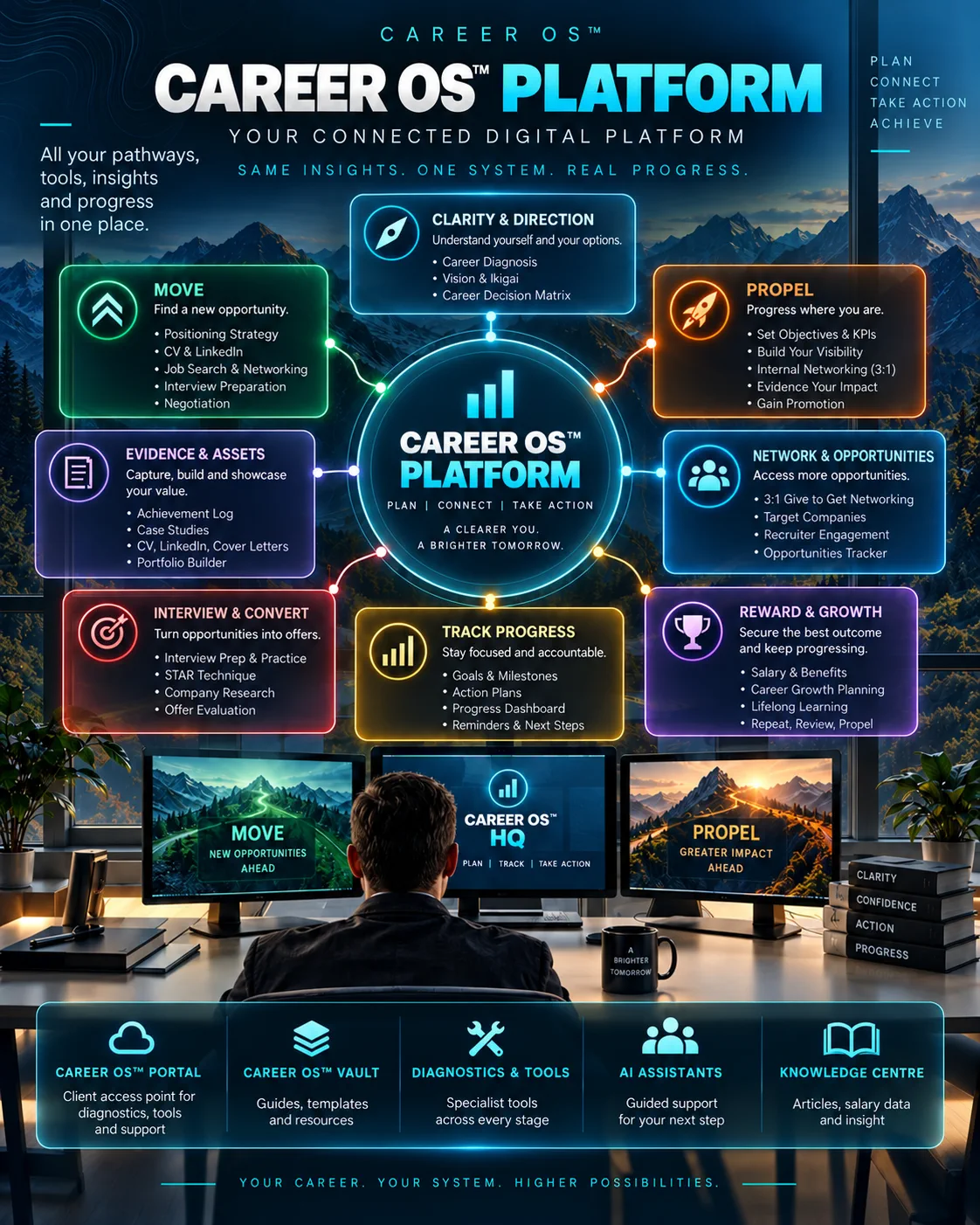
The Career OS™ Platform is the connected digital environment, not another sequential stage. It holds the diagnosis, the chosen pathway, the evidence you build, networking and opportunity activity, interview or progression conversations, and the reward outcome in one place.
Because everything is recorded against the same stages, progress is visible and the next action is always defined rather than improvised.
Explore the Career OS™ Platform or see how the tools connect.