
Built by an Operator, Not a Recruiter.
Dai Jones MBA BA(Hons) is the Founder & Principal Consultant of Eich Dyn and the creator of Career OS™. He spent 37 years in engineering and manufacturing leadership, including leading an organisation of 746 engineers, before building Career OS™ to govern senior career progression for experienced and technical professionals.
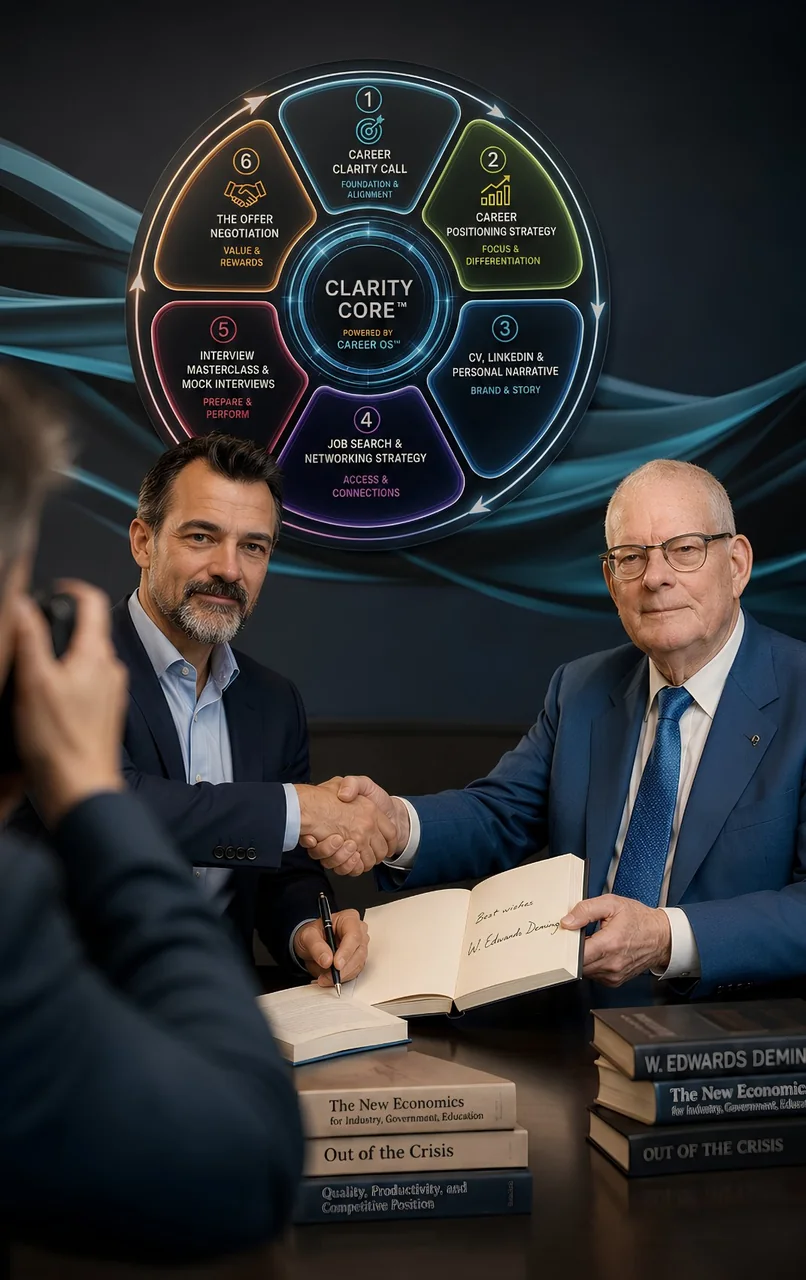
Dai Jones MBA BA(Hons) — Founder & Principal Consultant
Dai Jones is the founder of Eich Dyn and creator of Career OS™.
His approach to career consultancy was built through 37 years of engineering, product development, executive leadership, hiring and industrial transformation — not from observing careers from the outside.
Across that career, Dai has led complex organisations, recruited and developed technical talent, made senior hiring and promotion decisions, and delivered major engineering programmes across international teams.
Career OS™ translates that operating experience into a structured system for experienced professionals who want to MOVE into the right opportunity or PROPEL their career from where they are.
Careers Look Different From the Hiring Side of the Table.
Dai spent his executive career inside organisations where engineering credibility, commercial pressure and organisational politics meet: Jaguar Land Rover, Tata Technologies, Penso and the Manufacturing Technology Centre. Rather than moving through job titles, he moved through levels of responsibility — technical delivery, then leadership of teams, then accountability for whole programmes and the organisations built around them.
At Tata Technologies he led large international engineering teams across seven countries delivering VinFast vehicle programmes at exceptional pace: multi-site, multi-culture, fixed launch dates and no tolerance for ambiguity about who was accountable for what.
Why that matters to your career
Senior career decisions are not based on a CV alone. Decision-makers assess relevance, evidence, leadership credibility, commercial value, organisational fit, risk, influence, potential and their confidence in your future delivery.
Those are the criteria Dai applied for years when appointing and promoting senior technical people. They are also the principles that underpin Career OS™.
Decades of Decisions About People, Performance and Progression
Career OS™ was not designed from theory. It was designed by someone who spent years on the other side of the decision — assessing evidence, weighing potential and choosing who progressed.
Accountability for capability, performance and progression at organisational scale.
Direct experience supporting experienced professionals through a structured career-development system.
Alongside those roles, hiring, promotion, assessment and people development were routine parts of the job: shortlisting and interviewing technical candidates, building teams, sponsoring high performers and holding difficult conversations about readiness.
Understanding Both Sides of Career Progression
A change of employer, role, sector or geography — or repositioning specialist expertise into a different market and taking a deliberate change of direction.
Greater organisational scope, promotion, executive visibility, succession positioning, authority, recognition or reward — achieved where you already are.
The stakeholders and the execution differ. The questions do not:
- What is the right outcome?
- What value do I bring?
- What evidence proves it?
- Who needs to understand it?
- What decision am I trying to influence?
Career OS™ works both paths through the same six stages, applied to recruiters and hiring markets for MOVE, and to sponsors, stakeholders and internal decision-makers for PROPEL.
Career Problems Are Usually Connected.
- A strong CV aimed at the wrong role is still aimed at the wrong role.
- More applications built on weak positioning simply produce more rejection.
- Strong internal performance does not guarantee progression if stakeholders cannot see its strategic value.
Fragmented activity fails because the parts are dependent. Career OS™ exists to sequence them.
The sequence
Diagnosis → Positioning → Evidence → Opportunity Creation → Conversion → Negotiation
Explore the Career OS™ Methodology →Developing People Throughout a Leadership Career
Developing people was never a side interest. Recruiting, promoting, mentoring and coaching technical professionals — and building the leadership capability of the teams around him — was part of how Dai delivered programmes at scale.
That included growing engineers into managers, preparing leaders for wider organisational responsibility, and giving candid feedback about what genuinely stood between someone and their next level. It is the reason Career OS™ is delivered as consultancy with challenge rather than encouragement alone.
Working With Professionals Navigating the New Technical Economy
Alongside Eich Dyn, Dai works with FourthRev as a consultant coach, supporting mid-career professionals as they make career decisions and plan their next steps while developing expertise in artificial intelligence, machine learning, data science and data analytics.
That work supports participants on FourthRev Career Accelerator programmes, which FourthRev delivers in collaboration with university partners including the University of Cambridge Professional and Continuing Education (PACE) and The London School of Economics and Political Science (LSE). Dai’s consultant-coach role is with FourthRev, not with the universities.
It keeps him in weekly contact with experienced professionals moving into AI and data work: repositioning established expertise rather than discarding it, and translating newly acquired technical capability into credible career progression.
Engineering Discipline Applied to Careers
Career OS™ borrows what engineering does well: structured diagnostics, frameworks, evidence, decision models and execution discipline. It does not pretend a career is an equation. Ambition, family constraints, organisational politics, confidence, market timing, identity and personal risk all sit inside the decision, and they matter.
The system does not make the career decision for someone. It makes the decision clearer, better evidenced and more deliberate.
Technology, AI and the Changing Career Market
Emerging markets are rewriting skill requirements faster than job titles can keep up, recruitment is increasingly technology-mediated, and research, benchmarking and interview preparation can now be accelerated with AI. Dai builds those tools into how clients work.
Technology can improve research, thinking, preparation and execution. It does not replace professional judgement — about which opportunity is right, what your evidence really proves, and what a specific decision-maker needs to believe.
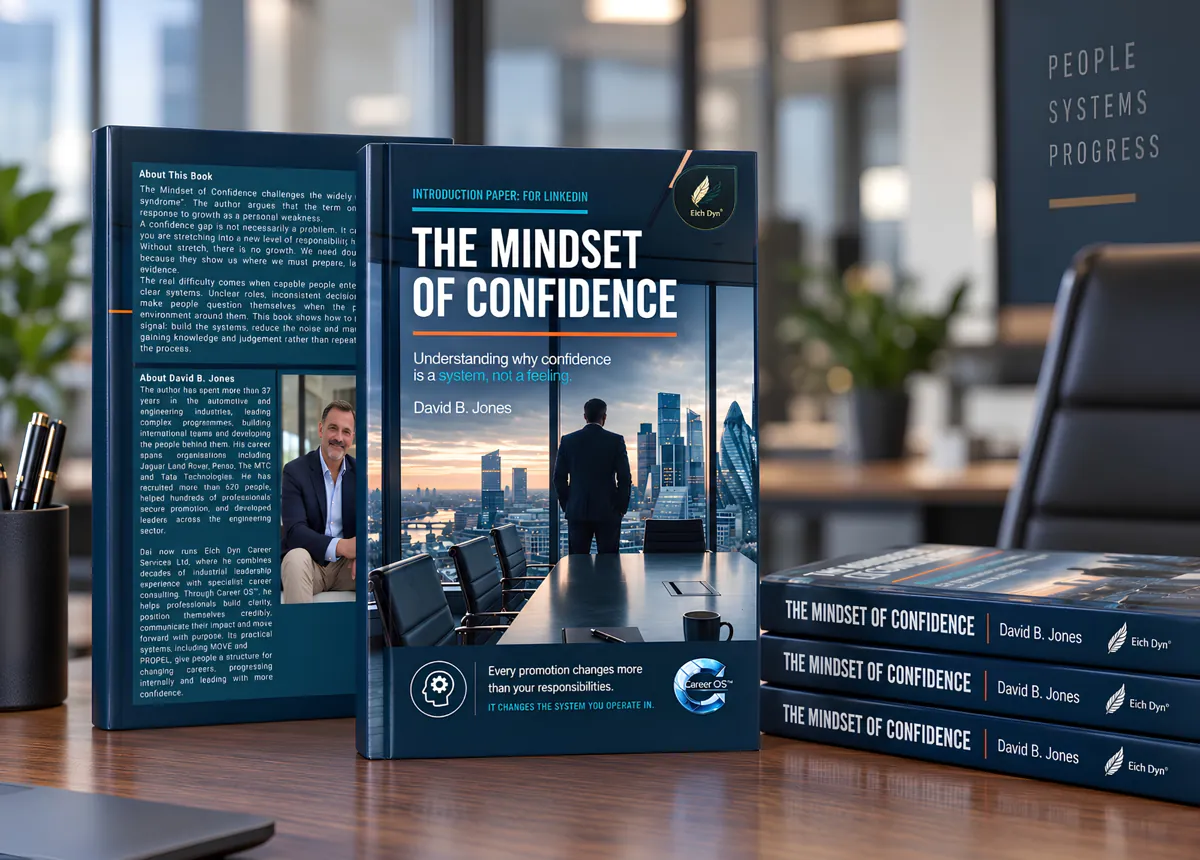
The Mindset of Confidence
By Dai Jones
Confidence is not a personality trait or a feeling to wait for. It is a system built through preparation, evidence, capable people, clear decisions and disciplined execution.
Read About The Mindset of Confidence →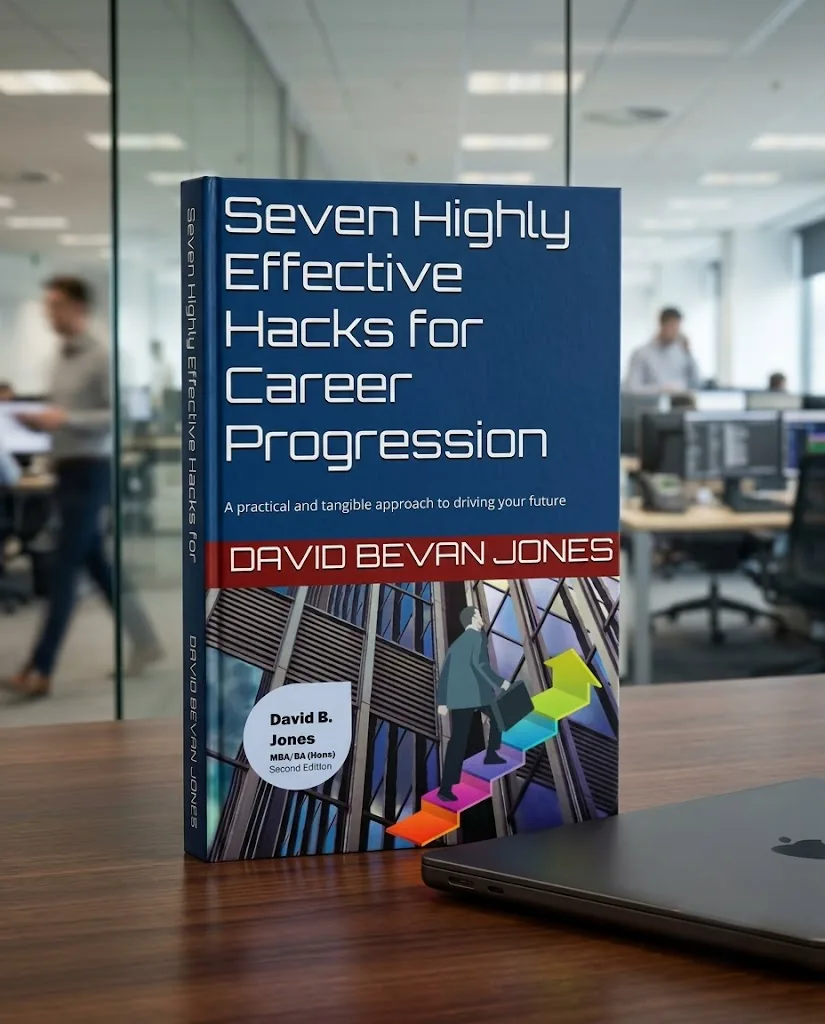
Seven Highly Effective Hacks for Career Progression
By Dai Jones
Writing the book forced the underlying thinking into structure — and that thinking contributed directly to the intellectual development of Career OS™.
Read About the Book →Why people searching for career coaching need structured consultancy
Most people who search for a career coach are trying to solve a decision, not a mood. They want to know whether to move, what they are worth, how to be taken seriously at the next level, and which evidence will stand up in front of a panel. Those are judgement questions, and judgement is what Dai brings: years spent hiring, promoting, assessing and leading technical and executive people, with commercial accountability for the outcomes.
That experience is what separates structured consultancy from general encouragement. The Career OS™ methodology turns it into a repeatable sequence — diagnosis, positioning, evidence, opportunity strategy, interview preparation and offer decisions — so the advice you receive is traceable to a diagnosis rather than to preference.
Why Work With Dai?
The argument is not years of coaching tenure. It is decades spent making and influencing the organisational and people decisions that determine careers — hiring, promoting, developing, leading, assessing, negotiating, reorganising, delivering and carrying accountability for people and organisational performance.
Career OS™ provides the structure. Direct consultancy provides the judgement, challenge and context.
Start With the Diagnosis.
If you are considering a significant career move, trying to accelerate progression where you are, or need greater clarity about the next stage of your professional life, diagnose the problem before choosing the solution.
- Where you are now.
- What you want.
- What constrains progression.
- Your likely MOVE or PROPEL path.
- Which parts of Career OS™ require attention.