Practical Tools for a Better-Planned Career Move
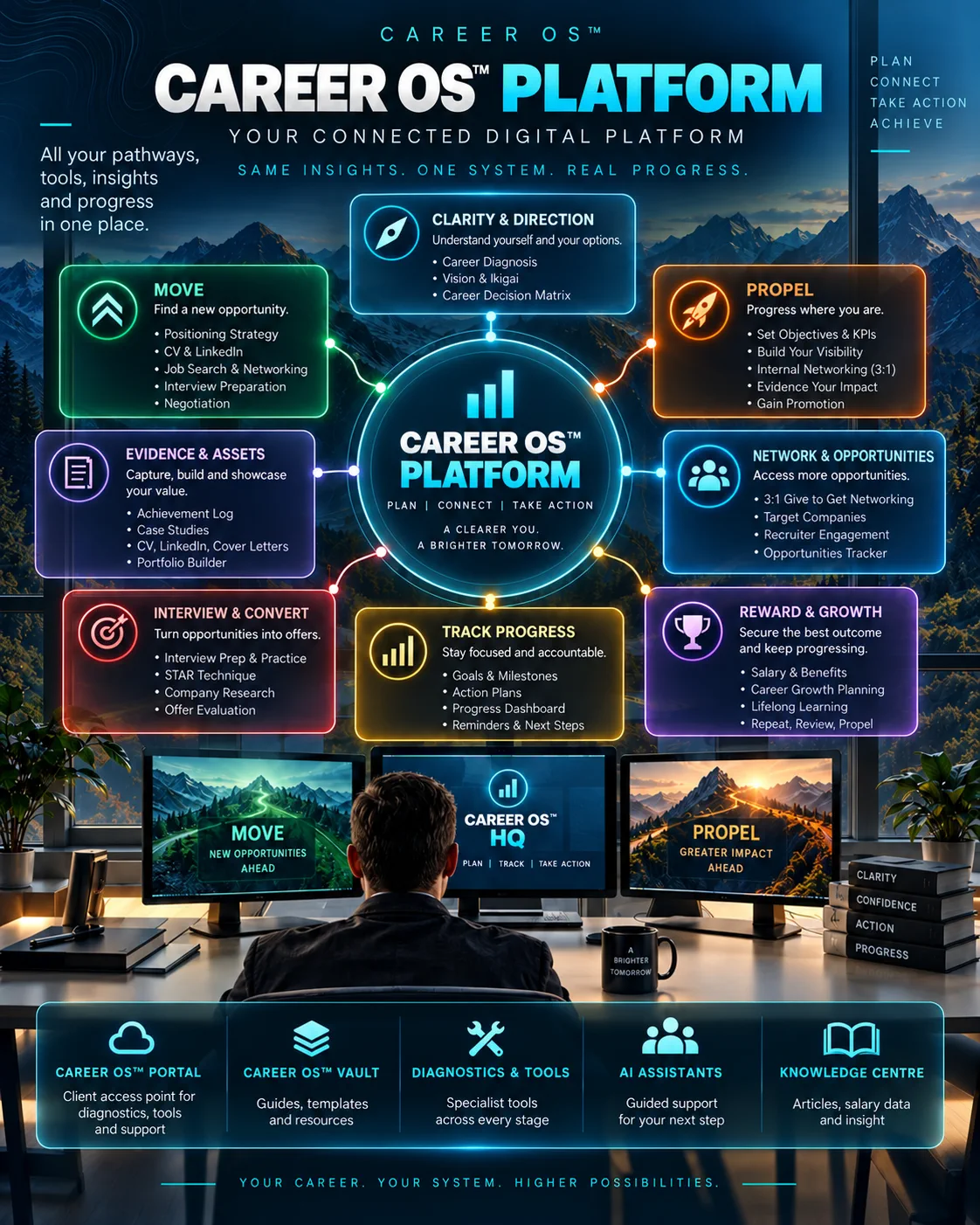
Career OS™ is a six-stage career operating system for senior STEM professionals, with practical tools that turn experience into a clearer direction, stronger assets and a better-planned career move.
The tools are structured resources designed to help you make better decisions, build stronger career assets and execute your job search with more discipline.
They are not random templates. They are part of a wider career operating system that helps you move from uncertainty to clarity, from scattered applications to targeted action, and from generic career messaging to a stronger professional proposition.
Previews shown intentionally softened. Full toolkit shared inside coaching.
What are Career OS™ tools?
Career OS™ tools are guided career resources that help you work through the key parts of a successful job move. They can help you:
- Clarify your target direction
- Define your value proposition
- Improve your CV, LinkedIn profile and professional narrative
- Build a more focused job-search plan
- Prepare for interviews with stronger evidence
- Understand your value before negotiation
Who are the tools for?
Career OS™ tools are built for professionals who do not want to leave their next career move to chance.
The tools are designed for capable professionals who already have experience, but need a clearer system for turning that experience into opportunity.
How do the tools fit into the six stages of Career OS™?
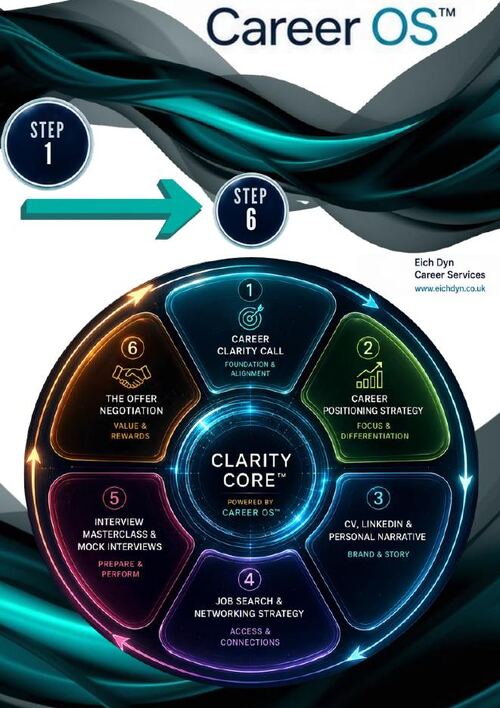
Career OS™ is built around six connected stages. The tools sit underneath each stage, helping you create the evidence, assets and decisions needed to move forward.
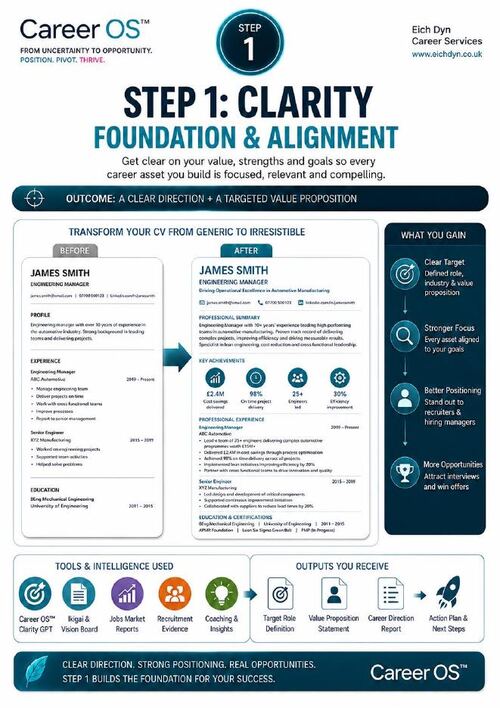
Career Clarity
Define where you are going.
Tools in this stage support target role clarity, strengths analysis, career direction and decision-making. The goal is to stop drifting and start building around a clear destination.
Target role definition, career direction report, decision criteria.
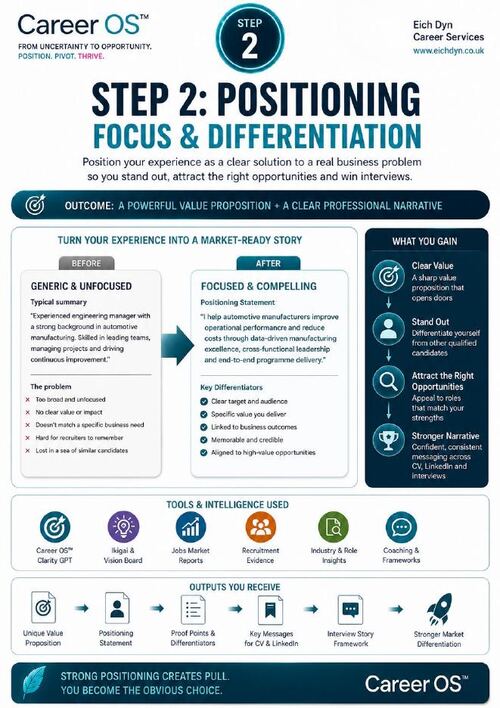
Career Positioning
Explain why you are valuable.
Tools in this stage support your professional narrative, differentiators, value proposition and market message. The goal is to make your experience easier for employers to understand and buy into.
Value proposition, positioning statement, proof points, key messages.
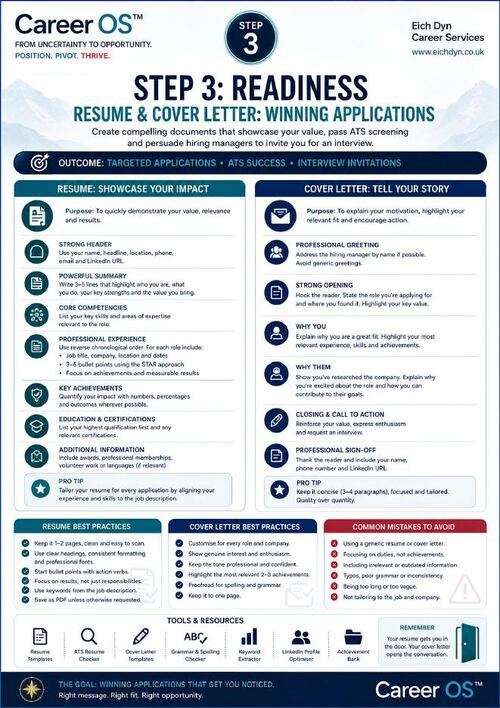
Career Readiness
Improve the assets employers actually see.
Tools in this stage support CV, cover letter, LinkedIn and professional profile improvements. The goal is to make your career assets more targeted, credible and interview-ready.
Improved CV sections, LinkedIn headline, cover letter structure, achievement bank.
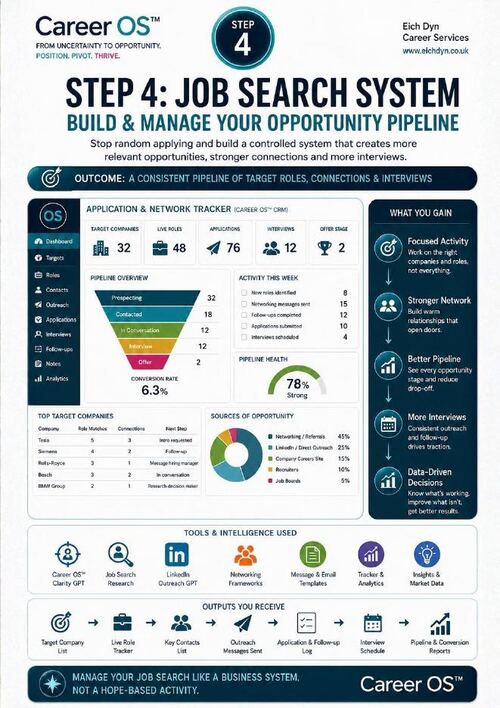
Job Search and Networking
Manage opportunity creation.
Tools in this stage support target company selection, job tracking, networking, outreach, follow-up and pipeline discipline. The goal is to treat your job search like a managed campaign, not a guessing game.
Target company list, live role tracker, outreach messages, follow-up plan.
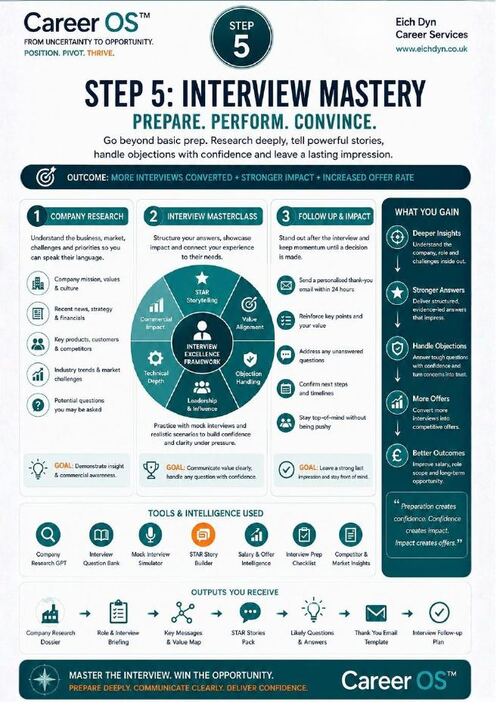
Interview Mastery
Prepare, practise and perform.
Tools in this stage support company research, interview evidence, STAR stories, question preparation, objection handling and follow-up. The goal is to enter interviews with stronger examples, sharper thinking and more confidence.
Company dossier, STAR story bank, interview question pack, follow-up email.
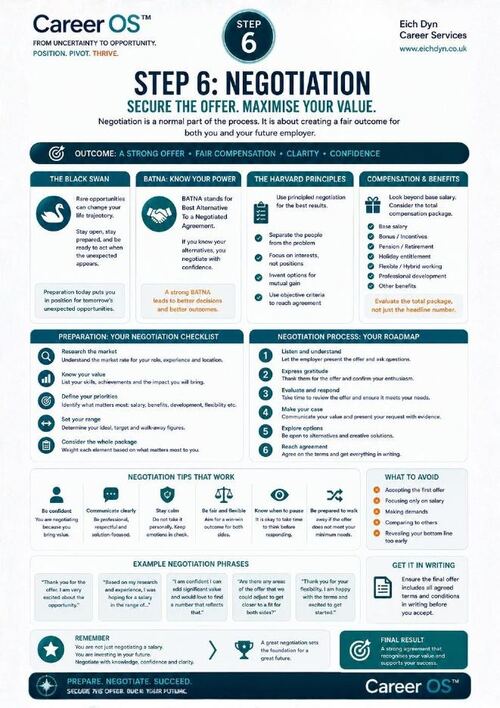
Negotiation
Understand and communicate your value.
Tools in this stage support salary benchmarking, compensation review, BATNA planning, offer evaluation and negotiation preparation. The goal is not to be aggressive. The goal is to be prepared.
Offer review, negotiation plan, compensation checklist, BATNA notes.
Example Tool Categories
The Career OS™ toolset includes practical resources across the full career journey.
Define your direction, target roles, career priorities and decision criteria.
Convert your experience into a clearer value proposition and stronger professional story.
Improve your profile, demonstrate impact and align your message to the roles you want.
Manage target companies, applications, networking, outreach and follow-up.
Research companies, prepare stronger answers and build evidence-based interview stories.
Assess market value, review offers and prepare for salary or package discussions.
How the Tools Support Coaching
The tools do not replace coaching. They make coaching more focused, practical and productive.
In coaching, we use the tools to create structure, evidence and action. Instead of discussing your career in broad terms, we work through the specific decisions and assets that influence outcomes.
The tools help turn coaching from conversation into execution. They give you something to work with, something to improve and something to take into the market.
Why This Matters
Most professionals do not fail because they lack experience. They struggle because their job search is fragmented.
The CV is separate from the LinkedIn profile. The LinkedIn profile is separate from the target role. The target role is separate from the interview evidence. The interview evidence is separate from the negotiation strategy.
Career OS™ brings these pieces together.
The tools help create a joined-up career campaign where your direction, message, assets, search activity, interview preparation and negotiation approach all support the same goal.
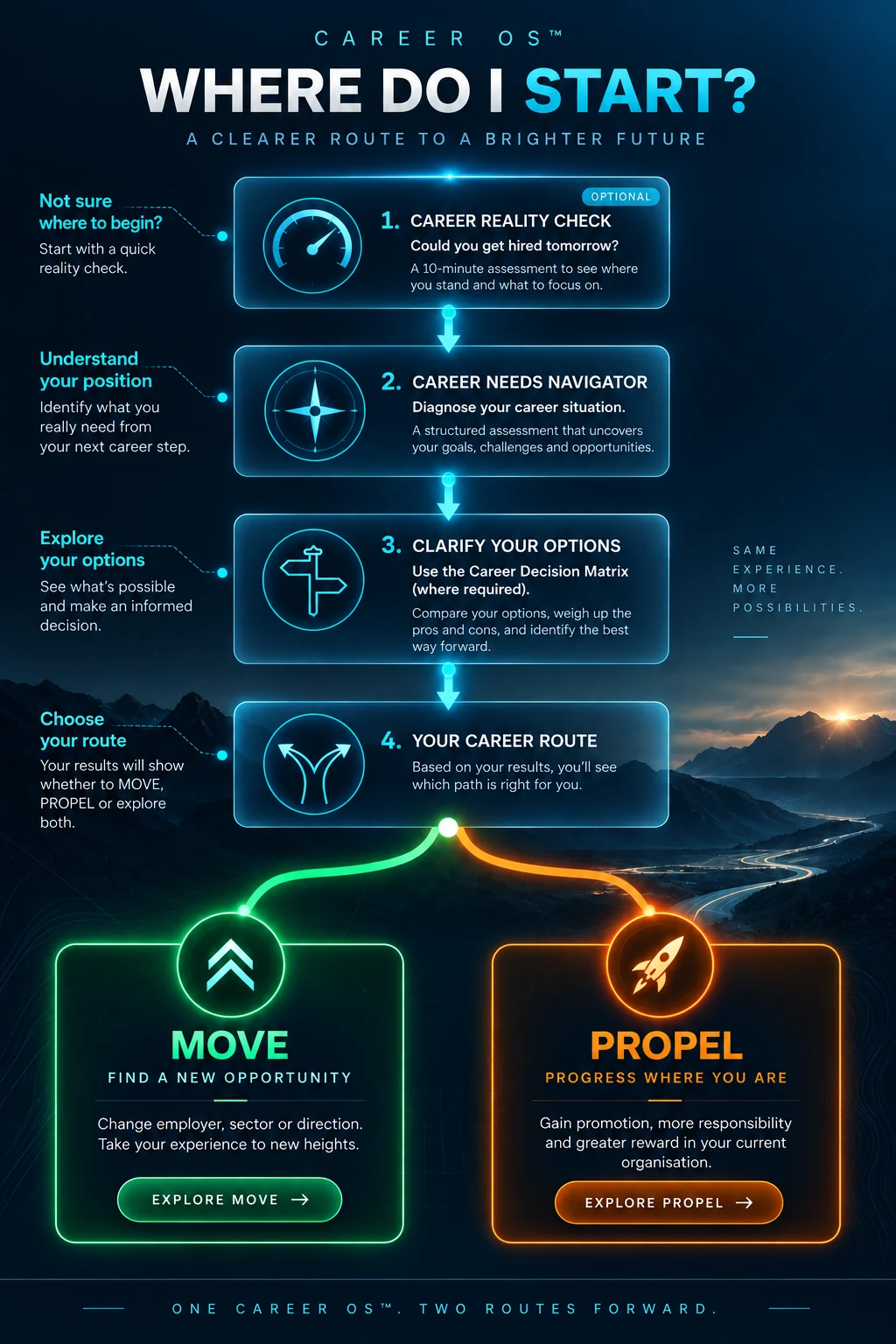
Start With the Career Diagnosis
The best place to begin is not by choosing a tool. The best place to begin is by understanding where your current career move is blocked.
Your Career Diagnosis identifies what is working, what is missing and which part of Career OS™ needs attention first. From there, the right tools and coaching support can be selected around your actual situation.