
Progression, Leadership & Managing Up
Progression from where you are is a different discipline from finding a new employer. This section is for professionals who want more scope, influence, recognition or reward inside their current organisation, and for engineers and specialists moving into and through management.
The guides cover the shift from personal output to team outcome, objectives and evidence of achievement, visibility with the people who actually make decisions, managing up, influence without authority, and saying no professionally so that priorities hold. Alongside that sits the practical mechanics of first-line leadership: delegation, one-to-ones, a credible first ninety days, and the choice between the senior technical track and people management. In Career OS™ this is the PROPEL pathway.
- Promotion
- Visibility
- Objectives and KPIs
- Leadership
- Managing up
- Influence
- Saying no professionally
In this category
15 resources curated for progression & leadership. Every link goes to its existing page — nothing here is a republished copy.
 GuideMOVE / PROPEL
Who Do You Really Need in Your Corner? Mentor vs Sponsor vs Coach vs Manager
When to use a manager, mentor, sponsor, network, leader, coach or consultant — and how to build a career support system rather than a dependency.
- Mentoring
- Sponsorship
- Career coaching
- Networking
 GuidePROPEL
How to Say No to Your Boss Without Damaging Your Career
Fifteen professional ways to challenge priorities, protect delivery and stay credible when you cannot take on more.
- Managing up
- Workload
- Prioritisation
 GuideMOVE / PROPEL
Engineering Management: The Full Guide
Roles, responsibilities, skills and career options across engineering management, from first-line leadership to director and VP.
- Engineering management
 InsightMOVE / PROPEL
The Art of Listening at Work: 9 Types of Listening
Nine distinct modes of listening — from pretend and selective through to empathic and reflective — and how senior leaders use them to question better and decide well.
- Leadership
- Communication
 GuideMOVE / PROPEL
How to Become an Engineering Manager
Preparing for a first engineering management role — readiness signals, evidence gaps and the conversations that create the opportunity.
- Engineering management
- Promotion
 GuideMOVE / PROPEL
Engineering Manager Career Path
Progression from engineer through manager, senior manager and director to VP — scope, evidence and reward at each level.
- Career path
- GuideMOVE / PROPEL
Software Engineer to Engineering Manager
Making the individual-contributor to leadership transition: readiness signals, evidence gaps and the steps that make the move credible.
- Engineering management
 GuideMOVE / PROPEL
Tech Lead to Engineering Manager
Moving from technical leadership into formal people management — authority, accountability and the parts of the craft you must now delegate.
- Engineering management
- GuidePROPEL
First-Time Engineering Manager Guide
Leading your first engineering team: the operating-model shift, delegation, one-to-ones, former peers and delivery under new accountability.
- Leadership
- First 90 days
 GuidePROPEL
Engineering Manager 30-60-90 Day Plan
A credible first ninety days: diagnose, establish an operating rhythm, then demonstrate leadership impact that others can verify.
- First 90 days
 InsightPROPEL
From Burnout to Breakthrough (Career Bites™)
Sustainable high performance, professional boundaries and learning when to say No — what engineering leadership teaches about capacity as responsibility grows.
- Leadership
- Boundaries
 ArticlePROPEL
Why Senior Engineers Stall at the Manager Threshold
The evidence gap that stops strong engineers being seen as leadership candidates, and how to close it before the next promotion round.
- Promotion
 ArticleMOVE / PROPEL
Engineering Management Career Paths: Senior Engineer to CTO
How technical careers ladder into executive leadership, and the scope and evidence expected at each transition.
- Career path
 Career OS™PROPEL
Career OS™ PROPEL — The Six Stages
Purpose and direction, role positioning, outcomes and evidence, presence and influence, execution, then leverage and progression.
Read Career OS™ PROPEL — The Six Stages →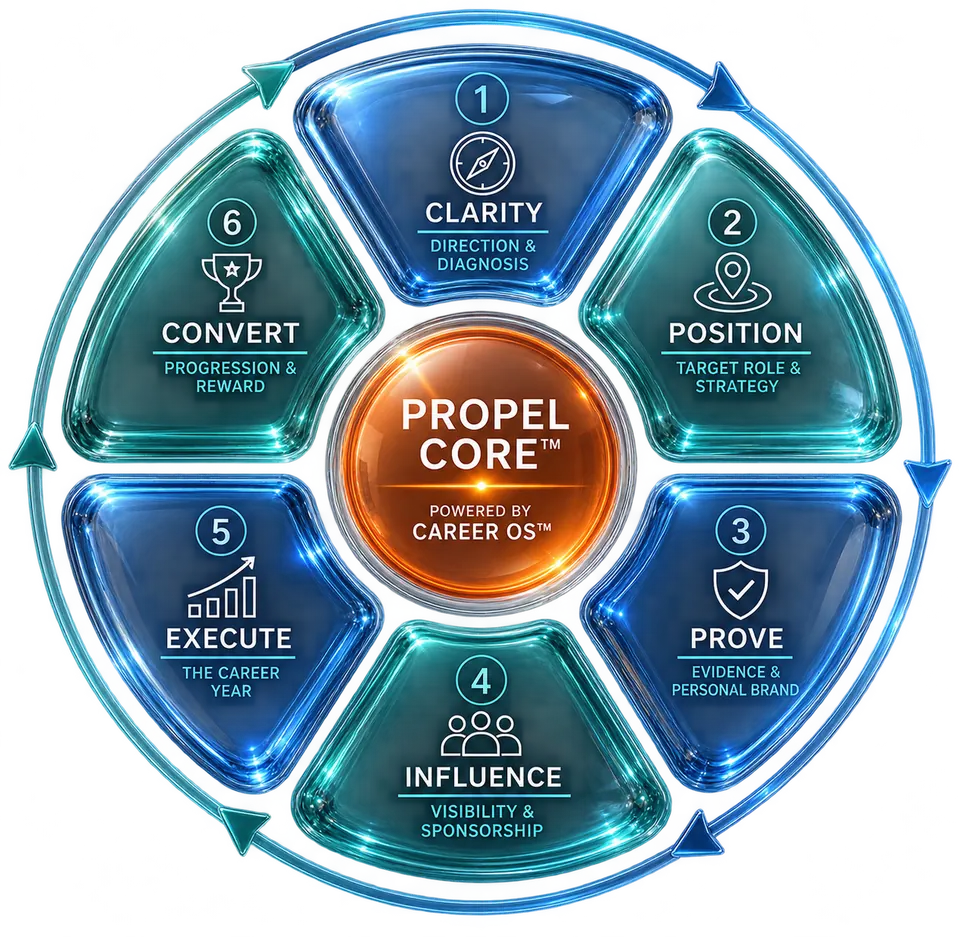 Career OS™PROPEL
Career OS™ PROPEL Stage 4 — Presence & Influence
Visibility with decision-makers, influence without authority, managing up and being credited for the work you already do.
Read this resource →


Also relevant here
Resources whose primary home is another category, but which answer questions raised in this one.
 GuideMOVE / PROPEL
Staff Engineer vs Engineering Manager
Choosing between the senior individual-contributor track and people management — leverage, evidence, reward and the reversibility of each decision.
- Engineering
- Career decision
 ArticleMOVE / PROPEL
Career OS™ — the Operating System for Senior Careers
A walk-through of the six stages — Career Diagnosis, Positioning, Evidence, Search, Interviewing and Offer — and why each one compounds into the next for experienced operators.
- Career OS™
- Methodology
- GuideMOVE
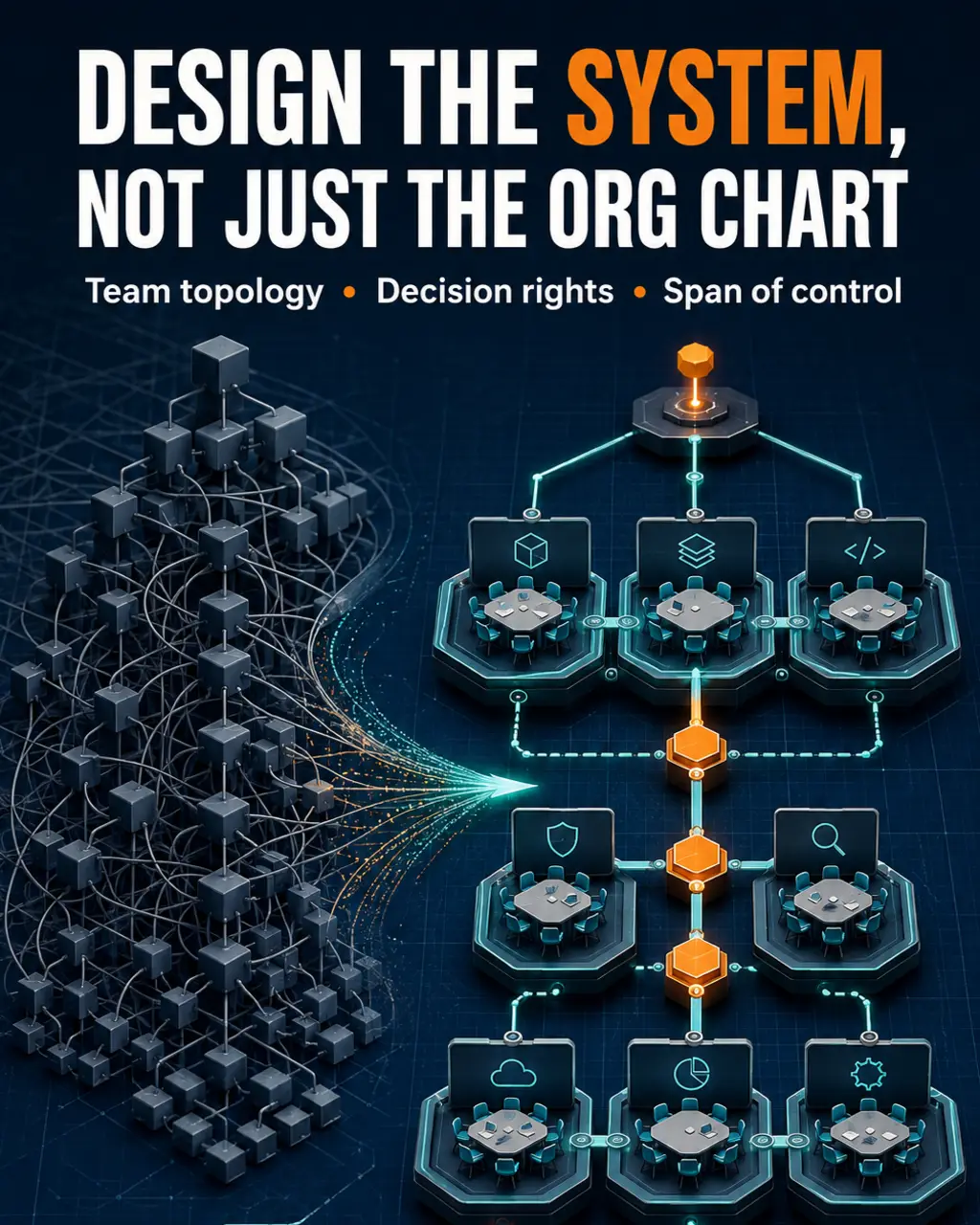
Engineering Leadership at Scale: Technical Director Interviews
Answering Technical Director interview questions on scaling engineering organisations — the Star Model, team topology, decision rights, span of control and the SCALE framework.
- Executive interviews
- Technical Director
 Case studyMOVE / Specialist
Seven Months Remaining: An Engineer’s Internal Progression Strategy
A manufacturing engineer secured an internal move against a seven-month visa deadline, including a failed first interview, feedback-led second attempt and employer-supported visa.
- Skilled Worker visa
- Internal progression


Tools that support this work
Leadership Preference Explorer
Understand your default leadership and communication preferences.
Open Leadership Preference Explorer →In-Role Satisfaction Score
Separate a fixable role from a role you have outgrown.
Open In-Role Satisfaction Score →PROPEL Readiness Assessment
Measure readiness to progress without changing employer.
Open PROPEL Readiness Assessment →
Continue in a related category
- Career OS™ MOVE
Positioning, CV & LinkedIn
Positioning, value proposition, quantified evidence, engineering CVs, leadership CVs and LinkedIn as a discovery surface.
Open the Positioning, CV & LinkedIn hub → - Career OS™ MOVE
Career Direction & Change
Stay-or-go decisions, redundancy, sector change, career pivots and transferable capability — choosing a direction on evidence rather than instinct.
Open the Career Direction & Change hub →
Explore the Career OS™ PROPEL pathway
PROPEL is the six-stage Career OS™ pathway for scope, influence, recognition and reward inside your current organisation.
Back to all Career Guides or the Knowledge Centre.