
The Art of Listening at Work: 9 Types of Listening That Make You a Better Leader
For engineers, technical specialists, professors, coaches and senior leaders
By Dai Jones · · Career Strategy Insights · Leadership & Communication

Why I Wrote This Guide
I learnt to listen long before anybody taught me that listening was a leadership skill. In fact, I probably learnt it because I had very little alternative. In my early twenties I moved quickly from being a young engineer working on my first vehicle architecture, including the MGF fuel tank and engine bay and the first plastic fuel tank used within Rover Group, into surface feasibility and engineering release using CADDS 4X and ICEM Surf. We helped deliver the first-generation Land Rover Freelander, known internally as ODEN, and I was beginning to understand how styling intent, engineering feasibility, manufacturing reality and tooling investment had to come together before a sketch could become a vehicle.
Then, in the space of roughly twelve months, my Chief Engineer and Senior Manager promoted me into my first junior management role. Part of the move took me away from the comfort of the CAD workstation and into leadership. I was twenty-four and suddenly responsible for forty people across three sites. Around thirty were contractors; the remaining ten included some of the company experts, people who knew the systems, history and technical detail far better than I did. Many were ten or fifteen years older than me and one, memorably, occasionally slept underneath his desk at lunchtime. They were knowledgeable, experienced, sometimes stubborn, and they had no reason to be impressed simply because the organisation had given their new manager a title.
I could have tried to establish authority by pretending that I knew more than them. I suspect that would have lasted about a fortnight. Instead, I asked questions. How long will this take? Why? What is stopping you? What do you need? Where is the real risk? What have we tried before? What do you think we should do? Then I listened. At first, I was more coordinator than leader, but gradually I began to understand the difference between an engineer saying something could not be done because it genuinely was not feasible and saying the same words because the obvious route was difficult or had failed before. I learnt who needed detail, who needed space, where a deadline could move and where another question could expose three days nobody thought could be recovered.
The important lesson was that asking somebody for their expertise did not diminish my authority. It strengthened it. I eventually began planning the work rather than simply coordinating it, then challenging it, pushing when I needed to push and making decisions that not everybody agreed with. By then something important had happened: I had won enough trust to lead people whose experience I could never plausibly imitate. I did not win that trust by suddenly acquiring their thirty years of knowledge. I won it by demonstrating that I respected it.
Years later I would learn the formal language of active listening, reflective questioning, coaching and Situational Leadership. I would recognise how much of what I had discovered by necessity echoed Dale Carnegie's insistence that influence starts with genuine interest in other people rather than the constant demonstration of our own importance. This guide is an attempt to take those lessons out of the classroom and place them back where they matter: in engineering reviews, leadership meetings, coaching conversations, laboratories, design studios and the careers of experienced professionals who are increasingly expected to be the person with the answer.
The Paradox of Seniority: The More We Know, the Less We May Listen
There is a paradox that develops quietly as our careers progress. When we are inexperienced, we are expected to listen because we do not yet know enough. We observe, ask for advice and seek context because the gaps in our knowledge are obvious. Yet as we become technically stronger, professionally recognised and organisationally more senior, that natural dependence on listening can weaken. Expertise gives us confidence, confidence gives us authority, and authority creates more opportunities to speak. Unless we remain conscious of it, the very experience that should make us better listeners can begin to make us worse ones.
This is particularly visible in technical and knowledge-based professions. Engineers solve problems. Materials scientists explain mechanisms. Chemists understand reactions. Data analysts interpret evidence. AI engineers explain models. Professors teach. Chief Engineers resolve disputes and Directors make decisions. The organisation continually reinforces the same message: you are here because you know. The problem begins when that becomes a behavioural shortcut: if I am here because I know, my job in the conversation must be to tell.
Consider the professor who has spent most of the day lecturing. A student approaches afterwards with a problem. The professor may recognise the likely answer immediately and deliver an excellent explanation, yet the student might not have needed lecture number seven. They may have needed somebody to ask what they already understood, where the confusion began and which assumption they were making. The same pattern appears in engineering. A senior person recognises the first two symptoms of a familiar problem and stops receiving the rest of the information because experience has already supplied an answer.
Hierarchy intensifies the effect. When a graduate talks for too long, someone usually interrupts. When a Vice President talks for too long, the room may simply continue listening. I have sat in meetings with ten Chief Engineers and Directors carrying hundreds of years of combined experience where the senior leader occupied almost the whole hour and finished by saying, in effect, that we had run out of time and asking whether there were any questions. That is not consultation. It is transmission followed by a nominal invitation to respond.
The strongest experts I have known retained something that can disappear surprisingly quickly with seniority: curiosity. They could ask apparently simple questions without worrying that simplicity might be mistaken for ignorance, change their mind without seeing it as loss of status, and listen to somebody more junior because the younger engineer happened, on that issue, to know something they did not. Their expertise did not eliminate listening. It gave them the experience to listen more intelligently.
Hearing Is Not Listening
We use hearing and listening as though they describe the same thing, but they do not. Hearing is largely automatic. Listening requires attention, interpretation, judgement, curiosity and restraint. It asks us not merely to receive words, but to decide what they mean, what may sit behind them and what we should do with the information once we have understood it.
Most of us can hear somebody perfectly well while barely listening at all. We have all experienced the conversation where the other person is visibly constructing their response before we have finished speaking. In technical organisations this happens particularly quickly because experience creates pattern recognition. Someone begins describing a problem and, within thirty seconds, a senior engineer recognises a familiar shape. The temptation is immediate: I know what this is. From that point the remaining explanation is filtered through an answer already forming.
Pattern recognition is valuable; it is one of the reasons experience matters. The discipline is being prepared, for a little longer, not to know. That means allowing the test engineer to finish the conditions under which the failure occurred before deciding the component is at fault, or allowing a client to finish describing their career problem before deciding they need a new CV. It means distinguishing what was said from what we expected to hear.
Listening also includes more than the transcript. Tone, pace, hesitation and silence can matter, but they should create questions rather than conclusions. Folded arms do not prove defensiveness, and a pause does not prove uncertainty. Strong discriminative listeners notice a possible inconsistency and investigate it rather than pretending to read minds. The principle is simple: communication carries more information than words alone, but interpretation needs humility.
It is also important to separate listening from agreement. A leader can understand a recommendation completely and still decide against it. A coach can understand why a client feels trapped without validating every assumption behind that conclusion. Real listening means the information has entered the decision-making process and been understood fairly. People do not expect to win every argument, but there is an enormous difference between leaving a room thinking, 'They disagreed with me,' and leaving it thinking, 'They never listened to me.'
The Listening Ladder: Nine Modes of Listening
The original BetterUp article by Elizabeth Perry ACC, the inspiration for this prose, describes nine forms of listening: informational, discriminative, selective, sympathetic, comprehensive, empathetic, critical, reflective and appreciative. I have deliberately reordered them here because, in leadership, they make more sense to me as a progression from noticing, to understanding, to learning, to evaluating, to clarifying and finally to deciding what the other person needs from us. I also treat selective listening differently. It is not a skill to cultivate; it is the failure mode that can corrupt all the others.
Active listening sits underneath the whole framework rather than being another box. You can listen critically, reflectively or empathically, but the question is how deliberately you are doing it. Active listening is the discipline of staying with the speaker long enough to understand meaning and intent rather than merely waiting for your turn.
1. Discriminative Listening: Reading What Is Not Being Said
Discriminative listening is the ability to distinguish between the different signals contained within communication: tone, pace, emphasis, hesitation, facial expression, posture and silence. The skill is not claiming to know what a gesture means; it is noticing when words and behaviour appear not to align and becoming curious enough to investigate.
Imagine an engineering manager asking whether a design release will meet its gateway. The engineer says yes and the plan appears green, but their language changes when validation is discussed. 'We should be okay' and 'assuming nothing unexpected comes out of the next test' are not necessarily reasons to stop the programme, but they are reasons to ask another question: what is it about that test that concerns you? The answer may reveal a marginal earlier result, weak correlation or supplier process change while there is still time to act.
The same thing happens in career conversations. A client can describe one move with rational language and another with visible energy. A strong listener does not decide that the second option is secretly their true calling; they simply notice the difference and ask why. The failure mode is the leader who receives verbal agreement from a room that has suddenly gone quiet and treats the words as the whole message. Seniority makes this more dangerous because people become more cautious about disagreeing directly.
2. Comprehensive Listening: Understand Before You Judge
Comprehensive listening is the discipline of establishing what somebody means before evaluating whether they are right. In complex organisations, the same word can carry several meanings. A designer may describe something as feasible because it can be created geometrically; manufacturing may hear feasible as repeatable at volume and within process capability; the programme manager may interpret it as deliverable within the timing plan. Everyone can leave believing they agreed while carrying different definitions of the agreement.
A strong technical leader therefore clarifies the governing meaning. 'If I have understood you correctly, this load case is producing the failure, the current design margin is insufficient, and you recommend changing the section rather than the material because the material change creates another problem elsewhere. Is that right?' That apparent simplification is not an admission of ignorance. It is decision control.
The same applies in coaching. A client says they want 'leadership'. Do they mean formal people management, greater authority over technical strategy, more influence, a Director title, or simply progression? The coach who understands too quickly can become dangerous because they solve the wrong career problem efficiently. A useful discipline is to be able to restate another person's argument in a form they would recognise as fair before challenging it. If I cannot explain your position accurately, I am probably not yet ready to tell you why I disagree.
3. Informational Listening: Listening to Learn
Informational listening is what we use when the primary objective is to learn and retain something new. It is natural early in a career because so much is unfamiliar. The difficulty appears later, when experience becomes a filter. Instead of asking, 'What can I learn from this?' we begin asking, often unconsciously, 'How does this compare with what I already know?'
An experienced Chief Engineer hearing an unconventional CAE result has two options. They can listen until the first inconsistency appears and explain why the result cannot be right, or they can recognise the inconsistency and remain curious long enough to understand the method, assumptions and evidence. The analysis may still prove wrong, but the leader has learnt before judging. This matters particularly in periods of technological change, where the organisational hierarchy and knowledge hierarchy can diverge sharply. A senior executive may carry thirty years of judgement while a younger AI engineer knows far more about a particular model or deployment method.
Informational listening also requires humility when evidence changes. Engineering has a brutal way of reminding us that reality does not care how senior we are or how much money we have already spent. A lesson is only learnt when future behaviour changes. That is why I have always valued engineering notebooks and decision records. On one programme we jokingly called the notebook the 'Captain's Log'. Mark Stanton, a very capable leader from Ford Europe, once arrived at Technical Issues without one, explaining that the minutes were taken and he remembered what mattered. The next time I saw him, he had a notebook. No announcement and no defence of the original position. He had absorbed the point and adjusted. Sometimes the clearest evidence that somebody listened is simply that their behaviour is different the next time you see them.

4. Critical Listening: Listening to Evaluate, Test and Decide
Critical listening begins once we have understood the message and now must decide what we think about it. It is the disciplined examination of evidence, assumptions, logic, consequences, risk and alternative explanations. It should not be confused with habitual criticism. Some people can find a weakness in every proposal and call that rigour. Real critical listening applies the same standard of proof to evidence we like as to evidence we dislike.
Engineering decisions are rarely made with perfect information. There may be strong CAE but limited physical testing, prototype results without production evidence or supplier assurances without capability data. A strong listener asks what is known, what remains assumed, how sensitive the result is, what would invalidate the conclusion and what happens if the organisation is wrong. The objective is not to remove uncertainty; it is to understand the shape of the risk well enough to make a conscious decision.

Critical listening is increasingly important with AI because fluency can be mistaken for truth. A polished explanation is not evidence. A confident model response can still be incomplete, outdated or wrong. Engineers and senior leaders need the same disciplines with AI-generated material that they apply in a technical review: where did this come from, what assumptions sit underneath it, what can be independently verified and what would change the conclusion? The failure mode is confirmation bias disguised as technical rigour, where contrary evidence is subjected to ten layers of scrutiny while evidence supporting the leader's preferred route is accepted immediately.
5. Reflective Listening: Listening to Clarify and Confirm
Reflective listening introduces a small but powerful pause between interpretation and action. Before responding to what we think someone means, we check that we have understood it correctly. This matters because confidence and accuracy are not the same thing; we can be completely certain about what someone meant and still be completely wrong.
In engineering, a leader might say, 'Let me make sure I have this right. You are not saying the component has failed the requirement; you are saying the evidence does not yet give you enough confidence to release it and you want another test before committing the tooling.' That sentence can save twenty minutes of argument because the team is now discussing the same decision.
Reflective listening is equally powerful in coaching. A client can spend twenty minutes explaining why they must stay in a role they no longer enjoy, covering salary, loyalty, market uncertainty and status. The coach might reflect, 'You have given me several practical reasons for staying, but I have not yet heard one reason why you want to stay. Is that fair?' Reflection is not parroting. It is returning the person's own information in a form that allows them to see the pattern more clearly.
6. Empathic Listening: Understand the World From Their Side of the Table
Empathic listening asks us to understand how a situation appears from another person's position, with their pressures, experiences and constraints rather than our own. It does not require agreement. A manager can understand completely why an engineer believes a programme milestone should move and still decide that it cannot. Empathy improves the quality of the judgement; it does not remove the responsibility to make one.
This matters because seniority changes perspective. The Director sees the portfolio; the engineer sees the component. The Chief Executive sees cash flow, customers and investors; the functional manager sees capability and technical risk. The coach sees patterns across hundreds of careers; the client sees one mortgage, one family and one decision that may define the next decade. None of those perspectives is automatically superior simply because it is broader or more detailed.
Empathic listening is particularly valuable where behaviour is being judged. An experienced engineer who becomes unusually resistant to change may simply be difficult, but they may also remember a previous programme failure created by almost the same approach. The leader can still challenge the behaviour yet first ask what they believe the organisation is missing. Difficult people are not always wrong, and agreeable people are not always right.
7. Supportive Listening: When the Person Needs to Be Heard Before They Need a Solution
Supportive listening, often called sympathetic listening, matters when the immediate need is not to interrogate evidence or solve the problem, but to recognise the emotional weight of what somebody is telling us. Engineers fix things, managers resolve issues and consultants advise, so experienced professionals are particularly vulnerable to solving too early.
An engineering manager whose team has worked nights to recover a major issue may already know what the next actions are. If the director's first response is another recovery plan, the conversation can feel dismissive. A more useful opening might be, 'I know how hard the team has pushed to recover this. Talk me through where it finally broke away from you.' Accountability remains, but the effort and disappointment have been recognised before the next demand arrives.
The same applies in redundancy, failed promotion or career change. A coach who immediately optimises LinkedIn and restructures the CV may be efficient at the wrong moment. Supportive listening does not turn career coaching into therapy; it simply recognises that careers are lived by human beings. The failure mode is the well-meaning problem solver who provides an action list before the person has finished explaining the problem.
8. Appreciative Listening: Listening for Value, Insight and Perspective
Appreciative listening is often described as listening for pleasure, but professionally I think it deserves a broader meaning. It is what happens when we listen because we value the quality of another person's thinking, experience or craft, even when there is no immediate decision to make. Most experienced professionals can identify conversations that stayed with them because they heard how somebody excellent thought, not because they left with an action.
Technical organisations used to create a great deal of this informally. A graduate could sit beside a specialist with thirty-five years of experience and hear stories about failures, odd behaviours, solutions that nearly worked and decisions that looked sensible at the time. Some of that tacit knowledge is difficult to capture in a specification or retrieve from an AI system. A senior leader visiting a laboratory can either ask only what is late and what is risky, or ask what the team is most proud of, what has surprised them and what part of the work outsiders underestimate. The second conversation gives access to a different organisation.
The failure mode is turning every story into our own. Experienced people have a large catalogue of examples and can easily respond to somebody else's achievement with, 'That reminds me of what I did.' The intention may be connection, but the effect can become competitive. If another person's experience is worth hearing, allow it to remain their experience for a little longer.
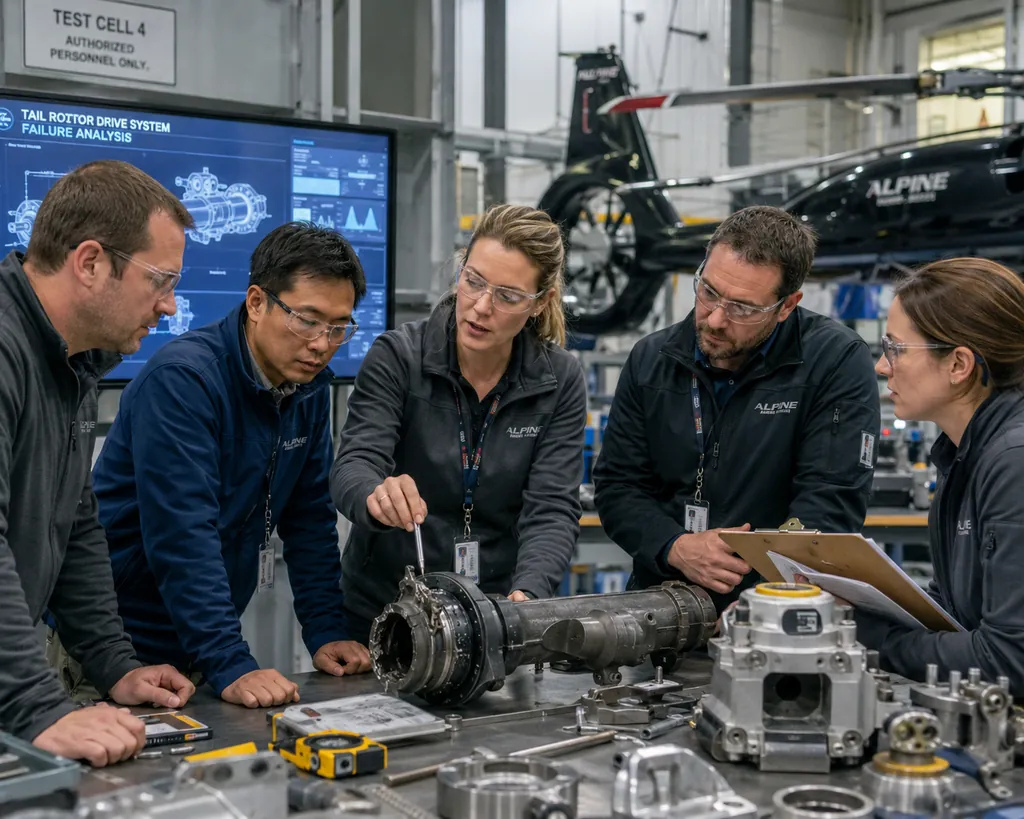
9. Selective Listening: When Listening Becomes Confirmation Bias
Selective listening is where the framework breaks. It is the conscious or unconscious tendency to give more weight to the information we want to hear and explain away what contradicts us. The danger is that it rarely feels selective to the person doing it. We believe we are applying experience and judgement while the standard of proof quietly becomes asymmetric.
A leader who believes a design is sound treats a favourable test as confirmation and an unfavourable one as an anomaly. A manager who has decided an employee is strong interprets success as capability and failure as circumstance; once the person is labelled weak, the same evidence can be reversed. Expertise makes the problem harder because experienced people possess more material with which to justify the preferred interpretation.
Hierarchy magnifies this. Leaders often say they want challenge, but employees judge that invitation by watching what happens to the first person who disagrees. If challenge produces defensiveness, extended rebuttal or exclusion, the organisation adapts. Difficult information is softened on its way upwards, and the leader eventually hears more agreement, mistaking it for stronger judgement. One of the most revealing questions is not, 'Do I allow people to disagree with me?' but 'What happens in the room when they do?'
The best defence is deliberate: ask who disagrees, invite the strongest argument against the preferred route, separate the quality of the evidence from the status of the speaker and ask what evidence would cause you to change your mind. If the truthful answer is 'nothing', the conversation is no longer an evaluation. It is a defence of a belief.
Lead Through Questions, Not Answers
One of the more persistent misconceptions about leadership is that the person at the top should have the answers. We promote people because they have judgement and a history of solving difficult problems, then risk turning that strength into a dependency. If every difficult issue brought to the leader ends with the leader supplying the solution, the team becomes very good at escalating difficult issues while the leader becomes increasingly indispensable and increasingly overloaded.
Questions create another route. 'Is the design ready?' may produce yes or no. 'What would have to be true for us to regret releasing it today?' immediately moves the conversation towards residual risk. 'Are you confident?' invites reassurance. 'Which part of this recommendation are you least confident about?' gives uncertainty permission to enter the room. Good questions do not merely gather information; they change the architecture of the discussion.
This does not mean experienced leaders should hide what they know. Sometimes the answer is required. The higher-value question is whether giving it now improves the decision or simply removes thinking from somebody else. If the leader asks the questions that allow a capable engineer to reach the answer, they may develop the capability to solve the next problem without the leader being present. That is the difference between solving a problem and developing a person.
The quality of a leadership question is ultimately tested by whether the answer has a genuine possibility of changing what happens next. Asking for input when the decision is already immovable may be communication theatre. Genuine questions create risk for the leader because somebody may expose a weakness in the preferred strategy or produce a better idea. That should be a successful leadership outcome if the leader's identity is attached to getting the decision right rather than personally providing the answer.
This is the same shift that newly appointed managers have to make in practice; the first-time engineering manager guide and the engineering management hub set out how the operating model changes when your leverage comes from other people's judgement rather than your own output.
Situational Leadership: Knowing When to Listen and When to Lead
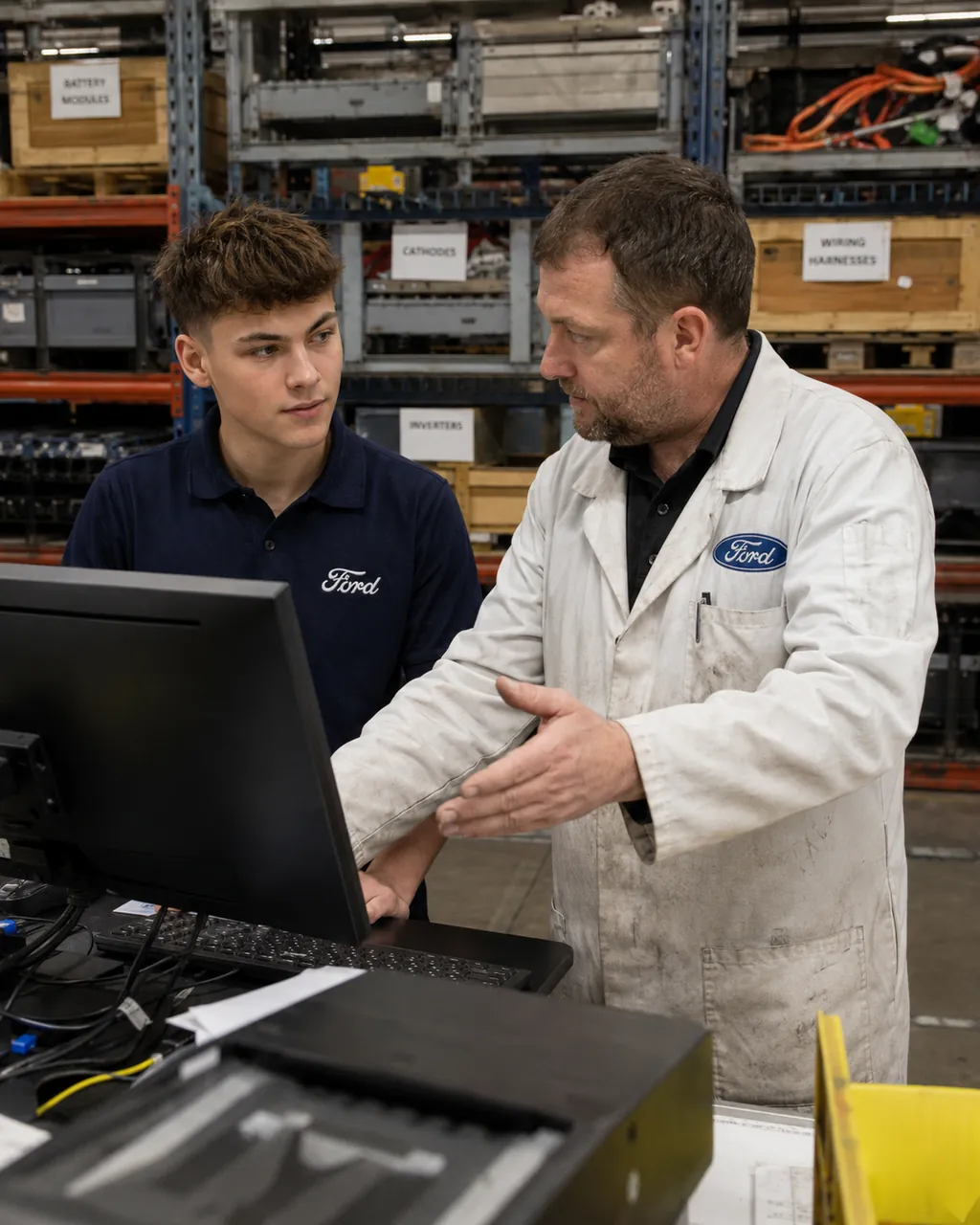
Two years after my first promotion, at twenty-six, my Chief Engineer decided my development needed another push. I was selected with around fifteen others for the Ford Leadership Development Programme at Dunton in Essex. As part of that programme I was allocated a one-to-one coach, Leslie. I will leave her surname out because it adds nothing to the story. What matters is that she was very good, and with the benefit of hindsight I can see much more clearly the skill with which she helped me put language around something I had already begun to learn through experience: leadership is situational, and listening itself must therefore be situational too.
The model gave me a simple structure. At one end sits the person who is relatively inexperienced in the task and needs more direction. At the other sits somebody highly capable and confident who increasingly needs autonomy rather than instruction. Between those positions lie stages where the leader needs to explain, coach, encourage, question, support or gradually step away. The lesson that stayed with me was simpler still: those who do not yet know often need to be told; those who already know usually need to be asked.
If I have just attended a company briefing and need to communicate quarterly revenue, the last thing my team needs is a coaching conversation about how they think the company performed. I know; they do not. My job is to tell them clearly. The same applies to a graduate learning an unfamiliar process or a safety-critical situation where the cost of discovery is unacceptable. Direction is not primitive leadership when the situation genuinely requires clarity.
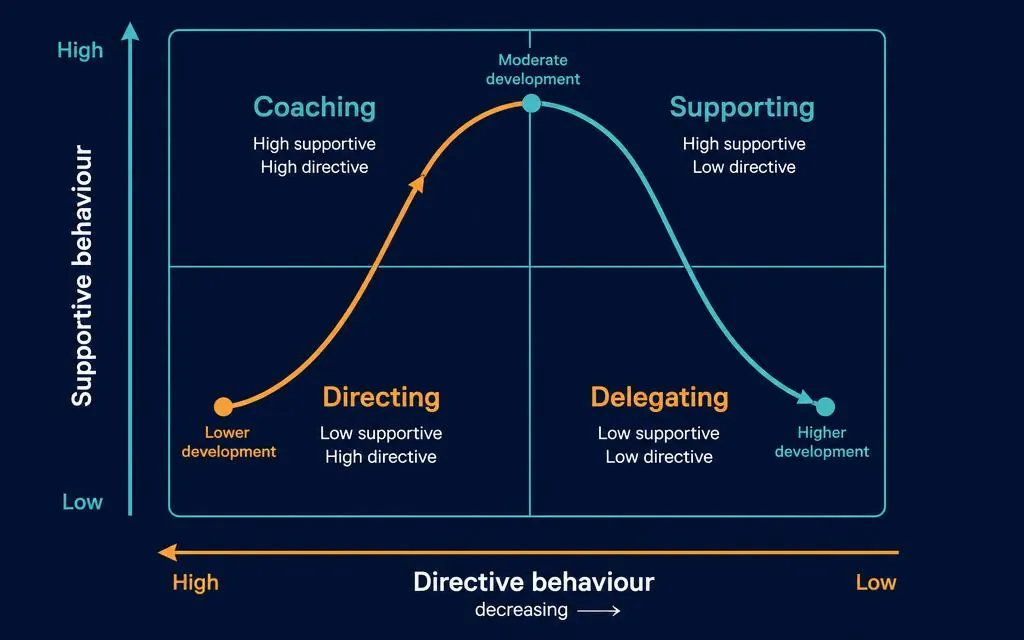
As competence grows, however, the balance should move. A developing engineer may need explanation and questions. An experienced engineer may know what should happen but need challenge, confidence, context or organisational support. A recognised technical specialist may need the leader principally to remove obstacles and stop interfering. Applying the same directive style to all three is not consistency; it is failure to diagnose the situation.
There is another variable I would add from experience: urgency and consequence. A highly capable expert may normally deserve autonomy, but a safety-critical issue minutes before a build can temporarily require more direction. An inexperienced person working on a low-risk developmental task may deserve more freedom precisely because the learning value is high and the consequence of error is low. Leadership sits at the intersection of competence, confidence, urgency and risk, and listening should move with it.
The sophisticated leader therefore listens before deciding how to listen. Do I have a competence problem or a confidence problem? Does this person need information or ownership? Are they asking me for an answer because they genuinely cannot know it, or because I have trained them to bring every difficult decision upwards? Do I need to challenge their thinking, or do I simply need to stop interfering? The model matters because it reminds us that great leaders do not always ask, and they do not always tell. They have enough range to do both.
What Exceptional Listeners Actually Do
Models become more useful when we can see them in the behaviour of real people. Four leaders from very different contexts stand out to me because they demonstrate that listening is not passivity. It is a way of extracting better information, developing other people's judgement and deciding when your own contribution is required.
Dick Elsy CBE was the first Director I watched closely when I was that twenty-four-year-old junior manager. Each week I travelled from the design studio at Canley to Solihull and into what, in those days, we simply called the war room. I would present the work of the design and styling teams and the forty engineers around me, supported by the adjacent senior manager Gerry McGovern. Dick fascinated me because he did almost the opposite of what I imagined a Director would do. A meeting might run for two hours, and he would write perhaps ten things in his notebook, each with a small tick box. He might ask a presenter one or two questions. The Chief Engineer did most of the technical lifting. Yet Dick's questions were on point and his summary at the end was superb. He would look directly at the person who owned each action and wait for them to play the commitment back. That was accountability without theatre.


Later, as founding Chief Executive of the High Value Manufacturing Catapult, Dick would lead the VentilatorChallengeUK consortium during COVID-19, helping bring together more than thirty organisations that manufactured over 13,000 ventilators for the NHS. The scale changed; the leadership principle did not.


Dr Bob Joyce was a different but equally powerful example. Bob led Jaguar Land Rover Engineering for around a decade before taking broader responsibility for Product Creation and Delivery. Technical Issues meetings were not comfortable places to arrive poorly prepared. Engineers would present test results, CAE predictions, competitor benchmarking, failure analysis and recommendations; Bob listened and asked perhaps a handful of questions before arriving at the one you did not want to hear, the question that went straight into the weakest assumption. Three seconds in front of twenty engineers could feel like three minutes. Yet the challenge was rarely personal. Bob was testing the engineering, and when a team knocked the question back with evidence there was often a smile or a wink rather than wounded ego.
One Technical Issues review involved Steen McCollin, our Head of Exterior Lighting, presenting a future road-illumination strategy with Audi as the benchmark. The roadmap was ambitious and the proposed R&D investment substantial. Bob listened to the engineering and then dismantled the business case, recognising that JLR operated at a different scale and that lighting was not the defining customer attribute in the same way that off-road capability was for Land Rover or driving dynamics for Jaguar. Steen went away with a much smaller investment than he had sought, but the point was not that Bob disliked technology. He understood where the organisation should choose to win. Over time, JLR formalised a community of 64 Technical Specialists and we increasingly previewed difficult issues with them before Bob's review. The organisation learnt to ask the hard question itself. Bob then needed to ask fewer of them. That is technical leadership at scale.
Professor Mark White gives me another version of the lesson. Mark spent nearly three decades in Jaguar Land Rover Body Engineering and has since worked internationally as an independent consultant and Technical Director of Alumobility. He was invaluable in my own career, including pushing for my progression into senior leadership in Research, where our teams developed more than forty aluminium-related technologies spanning advanced forming, recycling, joining and lightweight body structures. For me Mark is one of the world's leading experts in aluminium automotive body structures, but that is not why this story belongs here. I have watched him walk away from potentially lucrative consultancy work after listening to the customer's problem and concluding that aluminium was not the right answer. On such occasions he has been perfectly prepared to recommend a DP800 Advanced High-Strength Steel solution instead. He wins customers by understanding them before selling them his expertise. Put him on a stage or give him a report to write on aluminium structures and you may struggle to get a word in. That is not a contradiction. It is the right behaviour in the right situation.

Kofi Annan shows the same principle at an entirely different scale. Before becoming United Nations Secretary-General, Annan spent decades inside the UN system in administration, refugees, finance, staff security and peacekeeping. That career placed him repeatedly in situations where authority could not simply command agreement. During the 2008 Kenyan post-election crisis he entered mediation with experience and hypotheses but continued testing them against what he heard. In a later interview on the process, he described his preparation simply: 'I listened, and I tested one or two ideas.' He brought the political principals together publicly, then recognised they were not yet ready to negotiate directly and shifted to small teams. He built agreement first around stopping violence and humanitarian priorities before forcing the hardest political questions, and when constitutional expertise was required, he brought in somebody who knew more rather than pretending stature made him the expert in everything. The scale was geopolitical, but the transfer to business and STEM is direct: understand the room, establish what is genuinely agreed, identify what separates the parties, bring in deeper expertise where necessary, then know when listening has done its job and the leader must move.
David Hemery CBE and the Discipline Between the Questions
My formal understanding of coaching deepened when David Hemery CBE came into Rover Group to help leaders coach rather than simply tell. David was already an extraordinary figure: Olympic 400 metres hurdles champion at Mexico City in 1968, where he set a world record, later MBE and then CBE for services to athletics, and one of the people involved in the early movement that brought performance coaching from elite sport into business. He also told me that appearances mattered and that chewing gum was not professional, despite my defence that I was doing it for dental hygiene. I never had chewing gum at work again.
The more important lesson was that asking questions is not the same as coaching. You can ask ten excellent questions and barely listen to a single answer. I already knew that questioning worked, but David helped me understand the discipline between the questions. Stop thinking about the next item on your mental checklist and listen to the answer to the one you have just asked. If the answer opens another issue, stay with it. If the person hesitates, changes direction or reveals that the apparent problem is only the symptom, follow them rather than forcing them back onto your prepared route. In less diplomatic language, the message I internalised was 'shut up, Dai, and listen.'
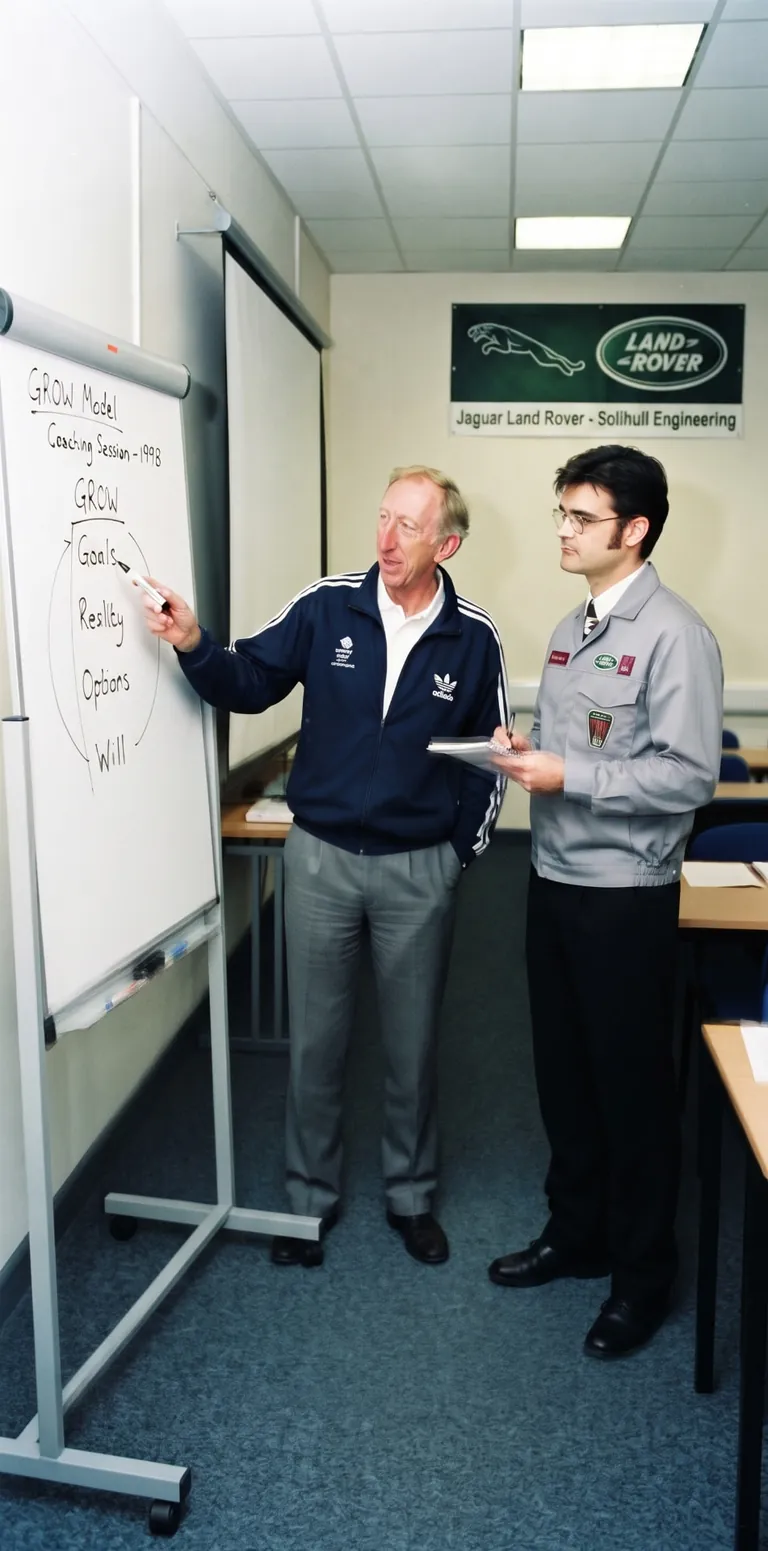
David taught me GROW: Goal, Reality, Options and Will or way forward. I have since adapted it to GROWS because I dislike coaching that ends with a slightly theatrical 'over to you'. The S is Support. The employee or client owns the action, but the leader has not abandoned them. They may need resources, time, money, expertise, authority or somebody senior to remove a roadblock. You own the action; I will not take it back from you, but I am still here.
At around twenty-eight I then had the slightly surreal experience of helping pass the same coaching principles to four Rover Group board members. Two took to it immediately. One left me unconvinced, and one senior Manufacturing Director was having none of it. His argument was that he had reached his position because he was experienced, had launched seven vehicles and could cut to the chase rather than ask ten people what the goal was. He had a point. Sometimes the leader should tell. The problem comes when experience becomes permission to cut to the chase every time, because the people around us never get to travel the road themselves. The value of GROW is not the acronym. It is the space between the questions, where listening creates awareness, judgement and ownership.
How a Coach Helps You Become an Exceptional Listener
Most people who want to become better communicators begin with techniques. They learn to maintain eye contact, avoid interruption, ask open questions and reflect what they have heard. Useful, but not enough. The harder question is how you listen now: what happens when you are under pressure, when you are certain you know the answer, when somebody disagrees with you or when the person opposite is taking far longer to reach the point than you would like.
A coach is valuable because most of us experience our intention more clearly than our impact. We know we are trying to help, so we do not notice that we interrupted. We know we have thirty years of relevant experience, so we do not recognise that we stopped listening after the first thirty seconds. A coach can notice that you solve too quickly, become uncomfortable with silence, ask three questions at once, answer your own questions or interrogate unwelcome evidence far more aggressively than evidence you already agree with.
The coach can then help identify your default listening mode. Some people are analytical and turn every conversation into a technical review. Others are naturally supportive and build trust but struggle to challenge. Some leaders are excellent informational listeners; others move instantly to solution because their careers have rewarded them for fixing. The objective is not to replace a natural strength. It is to widen the repertoire so that the response can change when the situation changes.
That development should be deliberate and narrow. Do not attempt to master nine listening styles next Monday. Pick one. Practise reflective listening for several weeks until checking understanding no longer feels mechanical. Then perhaps work on discriminative listening, noticing where tone or confidence changes without pretending you know why. Later add critical listening, learning to test evidence without turning the discussion into a contest. One listening mode used naturally may already differentiate somebody sharply from the average meeting room; several modes used flexibly begin to create genuine range.
AI can explain every model in this article, simulate conversations and help somebody rehearse questions. It cannot by itself turn those behaviours into instinct. Real people misunderstand questions you thought were clear, become defensive because of a tone you did not notice, sit in uncomfortable silence and occasionally tell you something you do not want to hear. A coach accelerates the learning by making those moments visible: what did you notice, when did you stop listening, what assumption did you make, which mode did the person need and which one did you provide? Over time the technique disappears and what remains is your manner, your leadership style and eventually something that feels like professional DNA.
Where that development work is done inside a career strategy — positioning, progression and leadership presence rather than technique for its own sake — it sits within Career OS™. For senior technical leaders, technical leadership career consulting and career consultancy for engineers are the two routes we most often use.
Practising Listening Until It Becomes Natural
Leadership development is often overcomplicated. We learn a model, recognise ourselves in it and leave the room believing we have changed. Very little changes until the behaviour survives pressure, impatience and disagreement. The most useful practice is therefore small enough to observe. For a period, decide that you will not interrupt in one-to-one conversations, or that you will summarise before challenging, or that every major technical review will include one question designed to surface contrary evidence. These are modest behaviours, but leadership is built through exactly this kind of repetition.
At first the new behaviour can feel slower because we are interrupting an automatic response. The experienced engineer who sees the likely root cause must resist saying it. The professor who is used to explaining must wait and discover what the student already understands. The coach who can see the career problem has to leave enough room for the client to reach it. That friction is development. Eventually silence stops feeling uncomfortable, the reflective question arrives without preparation, and curiosity becomes more natural than the checklist.
This is why there are no shortcuts around the hard yards. Books, courses and AI can provide language and rehearsal. Coaching can make the practice more intelligent. Real improvement comes from conversations, mistakes, feedback and repetition until better listening is no longer something you are trying to perform. Once one mode becomes natural, another is waiting to be developed. That is not a weakness of the framework; it is why leadership remains something we can continue improving for an entire career.
The Questions Should Get Better
When I look back at that twenty-four-year-old engineer suddenly given forty people across three sites, I can see that listening was not something I consciously selected as a leadership technique. I did it because I knew enough to understand the work and enough to know that the people around me had considerably more experience than I did. I could not credibly lead them by pretending otherwise, so I asked, listened, challenged and gradually learnt to turn their experience into coordinated delivery.
As my career developed, the challenge changed. I accumulated experience and became more capable of seeing answers quickly. That should make leadership easier, but it also creates a risk: the person who once listened because they knew what they did not know can become the person who speaks because everybody else expects them to know. The answer is not to become less decisive or suppress what experience has earned. It is to make sure that experience improves the quality of our listening rather than replacing it.
A young leader may ask, 'What do you think?' because they genuinely do not know. An experienced leader can ask the same question because they want to test a view, expose contrary evidence or understand what the specialist sees. The words may be identical, but the quality of the question is different because the judgement behind it is stronger. Perhaps that is what leadership maturity should look like: the questions get better while the willingness to hear the answers does not get smaller.
Nearly four decades after those early management experiences, I remain convinced that listening becomes more important as experience increases. When we are junior, listening helps us learn. As managers it helps us develop people. As senior leaders it keeps information moving through a hierarchy that would otherwise filter it. At the highest levels it can be what prevents confidence becoming isolation. At twenty-four, I listened because I knew the people around me knew things I did not. I hope experience has not changed that principle. It should simply have taught me to ask better questions.
Frequently Asked Questions
What are the main types of listening?
There is no single universally agreed taxonomy, but useful professional categories include discriminative, comprehensive, informational, critical, reflective, empathic, supportive or sympathetic, appreciative and selective listening. The important point is not memorising labels but understanding that different situations require different modes. Strong communicators can move between them rather than relying on one habitual style.
What is active listening?
Active listening is the deliberate process of paying close attention with the intention of understanding meaning and intent rather than merely waiting to respond. I treat it as the operating discipline underneath the listening modes rather than a separate tenth type.
Why is listening important in leadership?
Senior leaders make decisions using information held by other people. As responsibility grows, it becomes less realistic for the leader to possess the deepest knowledge in every subject. Hierarchy also filters information, so good listening becomes one of the mechanisms by which uncomfortable facts and specialist judgement continue to reach the person making the decision.
What is reflective listening?
Reflective listening means checking that you have understood somebody before responding to your interpretation. It can be as simple as summarising the issue in your own words and allowing the speaker to correct you. In technical decisions that small clarification can prevent a team debating the wrong problem.
What is critical listening?
Critical listening involves testing the evidence, assumptions, logic, consequences and risk behind a message. It is not habitual criticism. The strongest critical listeners apply the same standard of proof to evidence they agree with as to evidence they dislike.
What is the difference between empathic and supportive listening?
Empathic listening is primarily about understanding the situation from the other person's perspective. Supportive listening recognises that the immediate need may be space, acknowledgement or emotional support before analysis and action. Neither requires agreement.
When should a leader listen rather than tell?
Situational Leadership provides a useful answer. People who do not yet possess the knowledge or confidence for a task may need direction. Highly capable people generally need progressively more questioning, support and autonomy. The leader's job is to diagnose the person, task, urgency and risk rather than use one preferred style everywhere.
Can listening skills be learnt?
Yes, but learning the terminology is much easier than changing the behaviour. The most effective route is deliberate practice: choose one mode, use it repeatedly in real conversations, review the outcome and add another only once the first begins to feel natural.
How can a coach improve listening skills?
A coach provides an external view of behaviour that is difficult to observe from inside the conversation. They can notice interruption, premature problem-solving, discomfort with silence, leading questions, selective interpretation and other defaults, then help the leader practise a different response until it becomes natural.
Can AI teach someone to become a better listener?
AI can explain models, simulate scenarios and help rehearse difficult conversations. It cannot replace the experience of listening to real people when tone, history, ambiguity and consequences are genuine. AI can accelerate understanding; behaviour still requires practice, feedback and human interaction.
How can engineers and technical leaders become better listeners?
Start by noticing your first response when somebody brings you a problem. Do you solve, interrogate, reassure or ask what they think? That first move usually reveals your default. Then deliberately add another mode. Technical professionals often already have strong critical listening; the biggest gain may come from reflective, empathic or supportive listening when leading people rather than systems.
Acknowledgement and Sources
This article was inspired in part by Elizabeth Perry ACC's 2024 BetterUp article, '9 types of listening: how to be a better communicator'. Her original publication provided a useful starting taxonomy for considering different forms of listening. The leadership interpretations, engineering examples, coaching applications, personal experiences and conclusions developed here are my own.
The personal examples involving Rover Group, Jaguar Land Rover, Ford, Dick Elsy CBE, Dr Bob Joyce, Professor Mark White, Mark Stanton and David Hemery CBE are presented principally as first-hand professional recollections. Public sources were used to verify the external career and organisational details included in this first consolidated manuscript.
Selected sources
- Elizabeth Perry, ACC, '9 types of listening: how to be a better communicator', BetterUp, 21 December 2024.
- Center for Leadership Studies, Situational Leadership® resources on directing, coaching, supporting/collaborating and delegating leadership styles.
- Jaguar Land Rover, biography of Dr Bob Joyce and 2013 leadership announcement covering his Engineering and Product Creation responsibilities.
- Alumobility, biography and technical profile of Professor Mark White, Technical Director; related technical studies and OEM collaborations.
- High Value Manufacturing Catapult, VentilatorChallengeUK and Dick Elsy CBE leadership material.
- Olympics.com and British athletics sources on David Hemery CBE, 1968 Olympic 400m hurdles gold medal and world record.
- Centre for Humanitarian Dialogue, 'The Prisoner of Peace - An Interview with Kofi A. Annan', 2009, on the Kenya mediation process.
- Kofi Annan Foundation, biography and Kenya National Dialogue and Reconciliation materials.
Related reading
Want an external view of how you lead and listen?
A Career Diagnosis establishes where your leadership presence, positioning and evidence actually stand — and what to work on first.