
Career OS™ MOVE Success Story
How a Jaguar Land Rover Manager Repositioned Into Advanced Manufacturing at the MTC
Sofia had already built a successful career at Jaguar Land Rover and progressed to management grade. The problem was not capability or performance. She had reached a point where the next meaningful progression opportunity was difficult to see. Through targeted career positioning, CV development and interview preparation, she identified a route into advanced manufacturing and successfully moved to the Manufacturing Technology Centre, taking on a specialist role in New Product Development.
By Dai Jones · · Success Stories
Sofia Pavlopoulou came to Dai Jones from Jaguar Land Rover as a successful, management-grade professional. She was performing well and had already progressed. Her difficulty was more strategic: she could no longer see a credible next promotion or progression opportunity that would make proper use of the capability she had accumulated.
The work clarified direction, repositioned her experience, strengthened the way her CV communicated achievements and prepared her to explain her value in interview. Sofia then moved into the Manufacturing Technology Centre as a Manufacturing Specialist focused on New Product Development. She is now prospering there, applying her experience and helping other people develop across the teams around her.
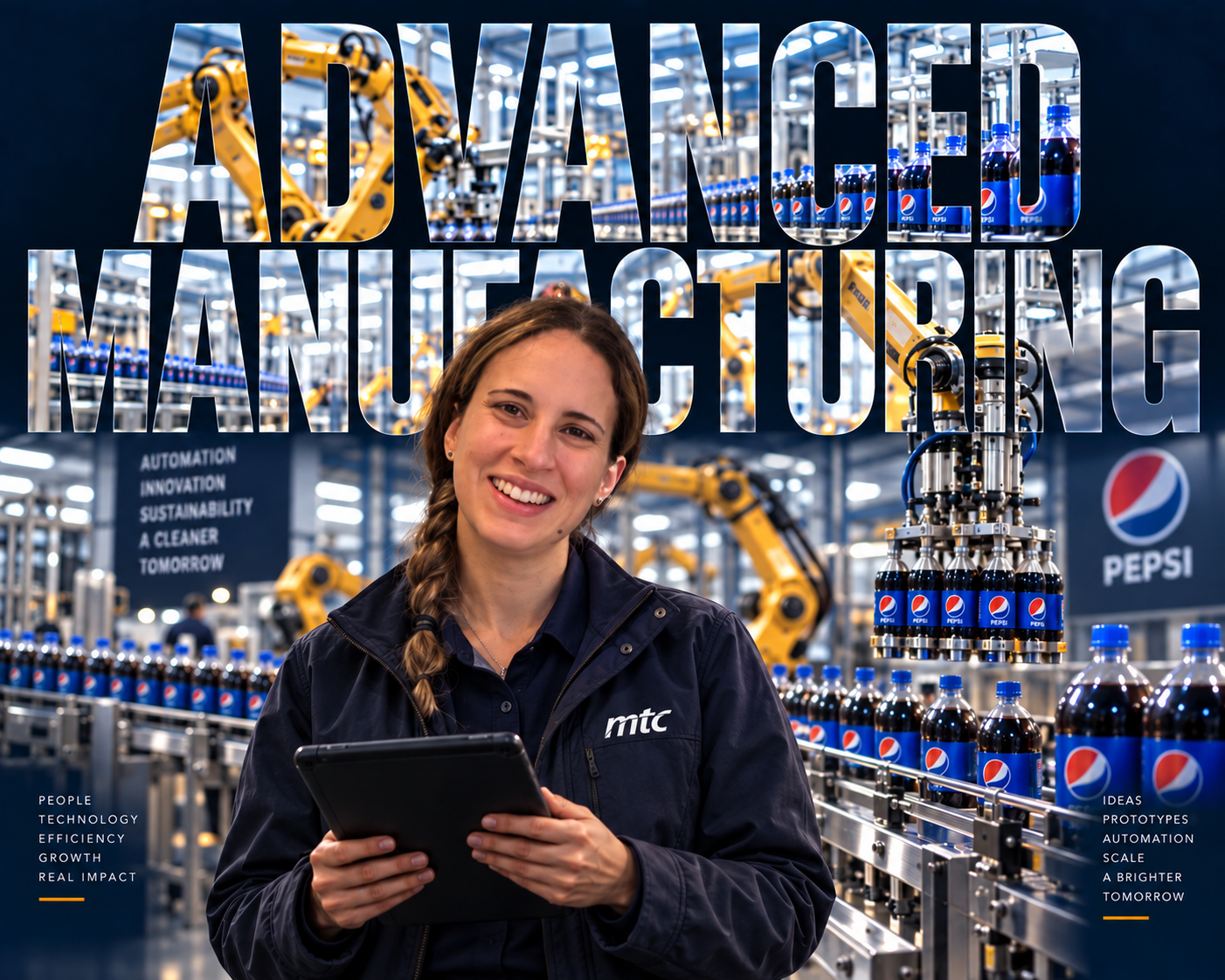
The Situation at a Glance
- Client
- Sofia Pavlopoulou
- Starting position
- Management-grade professional at Jaguar Land Rover
- Career position
- Performing successfully, but with no obvious next promotion or progression opportunity
- Career objective
- Find a role where her technical, manufacturing, leadership and team capabilities could develop further
- Career OS™ route
- MOVE — external employer and role progression →
- Core work
- Career direction, CV positioning, transferable capability, interview preparation and confidence
- Target direction
- Advanced manufacturing and technology
- Outcome
- Appointed to a Manufacturing Specialist role focused on New Product Development at the Manufacturing Technology Centre
- Longer-term impact
- Developing in the role, transferring her experience to others and helping build capability across teams
Reaching Management Grade — But Not Seeing the Next Step
Sofia’s position at Jaguar Land Rover matters because this was not a recovery story. She had built a successful career, earned progression to management grade and was contributing effectively inside a major engineering organisation. There was no performance failure to explain and no employment crisis forcing an immediate decision.
The constraint was the absence of a visible next step. A professional can be valued in the role they hold while finding that the organisation no longer presents a compelling route to broader responsibility, deeper specialism or renewed development. That is a career plateau: not necessarily a period of poor work, but a point at which continued performance does not automatically create meaningful progression.
Staying can still be a rational choice. The risk is allowing competence and familiarity to become substitutes for direction. Sofia needed to decide whether the next stage of her career could be created inside the existing structure or whether her capability would develop more fully in a different environment.
When a Career Plateau Requires a Different Question
The obvious question at a plateau is often, “How do I get promoted here?” That question assumes the right destination exists inside the current organisation. For Sofia, the more useful question became: “Where else could this accumulated capability create more value?”
Career OS™ treated the decision as a sequence rather than a leap. First, understand the capability already present. Second, identify its transferable value. Third, establish a credible destination. Fourth, reposition the evidence for that destination. Finally, execute through the CV, application and interview. Each stage reduced the gap between an established automotive career and an advanced-manufacturing opportunity.
This is the purpose of the Career OS™ MOVE pathway. It does not assume that leaving is always correct. It creates a disciplined way to test whether an external role, employer or sector offers a stronger fit than the path currently in view.
Recognising the Transferable Value
Sofia brought experience formed inside a large engineering and manufacturing organisation. That included an understanding of how products and manufacturing activity develop, the expectations associated with management-grade responsibility and the practical demands of working across disciplines rather than inside one isolated function.
Her value was not confined to a job title. She could communicate with technical professionals, contribute collaboratively, work effectively with teams and bring experience that could help other people develop. Her education, background and manner were all relevant to an environment where specialists need to combine technical depth with constructive team contribution.
A career pivot therefore did not require Sofia to discard her previous career or start again. It required a different account of it. The task was to show how the evidence built at Jaguar Land Rover could answer the needs of an organisation concerned with advanced manufacturing technologies and the development of manufacturing capability.
This principle is central to a credible engineering CV: the document must communicate achievements, scope and transferable value, not simply list duties under a familiar employer name.
The Pivot Into Advanced Manufacturing
The destination was the Manufacturing Technology Centre, where Sofia secured a Manufacturing Specialist position focused on New Product Development. In this context, New Product Development should not be read as conventional consumer-product design or brand-led product creation.
It relates to advanced manufacturing technologies, processes, manufacturing solutions and products, and work undertaken before mature production deployment. The environment is about understanding how new manufacturing capability can be developed, tested, improved and made ready for wider industrial use.
That distinction explains the fit. Sofia was moving from an established automotive organisation into a setting where manufacturing knowledge, technical collaboration and the ability to help teams turn emerging work into usable capability all matter. The sector label changed; much of the underlying professional value remained relevant.
Building the Case for the MTC
The application needed to make the transition understandable to a receiving organisation. Four connected areas carried that work.
Positioning
The career narrative moved beyond the current JLR title and expressed the manufacturing, technical and team value Sofia could bring to a new environment.
Transferability
Relevant evidence was connected to advanced manufacturing needs. The case rested on demonstrated capability, not an unsupported claim that every skill travels everywhere.
Interview preparation
Preparation focused on practical strategies for explaining achievements, answering in the target organisation’s context and making the value of the transition easy to assess.
Evidence-based confidence
Confidence came from knowing which examples supported the move and how to communicate them, rather than from motivational language or rehearsed certainty.
The CV and interview were not separate exercises. The CV established the proposition and evidence; interview preparation enabled Sofia to explain and defend that proposition in conversation. That same connection underpins Eich Dyn’s public guidance on interview preparation for engineering managers and technical professionals.
The Interview Converted
Sofia converted the opportunity and secured the Manufacturing Specialist role. Her public review describes the contribution of the CV and interview work in her own words:
“Not only did he help me refine my CV so that it clearly highlights my strengths and achievements, but he also provided excellent tips for interview preparation, giving me practical strategies that boosted my confidence and helped me land my dream job.”
From Jaguar Land Rover to Manufacturing Specialist
Sofia moved from management grade at Jaguar Land Rover into a Manufacturing Specialist role at the Manufacturing Technology Centre. The result was an external career progression into advanced manufacturing, built on capability she had already established and evidence she learned to communicate more effectively.
Getting the job is important, but it is incomplete evidence of career fit. An interview can show that a candidate has made a credible case. What happens after appointment shows whether the capability transfers into the operating environment itself.
Sofia’s continuing contribution matters for that reason. She did not simply pass a selection process and arrive in a different organisation. She has been able to establish herself, demonstrate her capabilities and use her experience in work that develops manufacturing knowledge and people.
What This Career Move Demonstrates
Career plateaus are not always capability problems
A strong performer can reach a point where the available structure, rather than personal performance, limits the next move. Diagnosis should distinguish between a gap the individual needs to close and an opportunity the organisation cannot currently provide.
Management grade is not necessarily the final destination
Reaching management grade proves progression; it does not oblige somebody to pursue only the next rung of the same hierarchy. A specialist role in a different environment can offer new scope, stronger alignment and a different form of professional influence.
Experience transfers further than job titles suggest
Titles describe where work sat in one organisation. Transferable evidence explains what the person can do elsewhere. Manufacturing understanding, technical communication, collaborative leadership and team contribution can remain valuable even when the employer and sector context change.
External progression can deepen technical influence
Progression is not only upward movement through a management hierarchy. It can also mean entering an environment where technical experience influences new manufacturing capability, where specialist contribution carries weight and where knowledge can be transferred to others.
Interview preparation makes transferable value legible
The receiving organisation cannot be expected to translate a candidate’s entire career on their behalf. Evidence-led preparation helps interviewers understand why past achievements matter in the new context and what the candidate is likely to contribute after appointment.
Progression Didn’t End With the Offer
Sofia is now established in the MTC environment. She is prospering in the position, demonstrating her capability and sharing the experience she brought from her earlier career. She is also helping to train and develop people within the teams around her.
That continued contribution is consistent with the strengths identified before the move: an ability to work collaboratively, communicate with technical colleagues and help teams build capability. It gives the transition a more useful measure than the appointment alone.
The measure of a good career move is not simply whether somebody gets through the interview. It is whether the person subsequently belongs and performs in the environment they moved into.
Sofia’s Independent Review
Tailored, supportive and results-driven coaching
“Working with Dai has been a really valuable experience. Not only did he help me refine my CV so that it clearly highlights my strengths and achievements, but he also provided excellent tips for interview preparation, giving me practical strategies that boosted my confidence and helped me land my dream job. Dai offered me a tailored approach to match my specific goals, and he was approachable and supportive, always following up to check on my progress. I highly recommend Dai to anyone looking for professional, results-driven career coaching to take the next step in their career.”
MOVE or PROPEL?
Sofia had already progressed internally to management grade. The issue was that the next appropriate opportunity was no longer visible inside the organisation. That made this predominantly a MOVE problem rather than a PROPEL problem.
Career OS™ MOVE applies when progression requires a change of role, employer, sector, geography or career direction. The Career OS™ PROPEL pathway applies when the better route remains inside the current organisation and the work is to strengthen scope, visibility, influence, recognition and reward.
If the right pathway is not yet clear, the free Career Readiness Assessment and Career Needs Navigator provide the existing starting point. A Career Diagnosis with Dai is available when the decision needs direct professional judgement.
Frequently Asked Questions
How do I know whether I’ve reached a career plateau?
A plateau can exist even when performance remains strong. Typical signs include no credible next role, limited scope to deepen responsibility, repeated development conversations without movement, or a growing gap between what you can contribute and what the organisation can offer. The useful question is whether the position still creates evidence, capability and options for your next stage.
Can automotive experience transfer into advanced manufacturing?
Yes, where the underlying evidence matches the receiving environment. Manufacturing knowledge, technical judgement, structured problem-solving, cross-functional delivery, leadership and the ability to work with specialist teams can all transfer. The candidate still needs to explain that relevance in the language of the target role rather than relying on the automotive employer name alone.
Do I have to take a step backwards when changing sector or specialism?
Not necessarily. A change of sector can preserve or deepen professional value when the move is based on demonstrable capability rather than title matching. The appropriate level depends on the role, the evidence and the new organisation’s needs; no particular outcome is guaranteed.
How can career consulting help with a technical career pivot?
It can help define a credible destination, identify which technical and leadership evidence transfers, reshape the CV around that evidence and prepare the candidate to explain relevance in interview. The purpose is not to manufacture experience, but to make existing capability legible to a different employer.
What’s the difference between Career OS™ MOVE and PROPEL?
MOVE is for progression that requires a change of role, employer, sector, geography or direction. PROPEL is for building scope, visibility, influence, recognition and reward within an existing organisation. Sofia had already progressed internally; because the next credible opportunity was external, her work was predominantly MOVE.
Publication and Evidence Note
This case uses the facts supplied for publication about Sofia Pavlopoulou’s work with Dai Jones, her progression from Jaguar Land Rover to the Manufacturing Technology Centre and her continuing contribution in the role. The testimonial is reproduced exactly from Sofia’s public Trustpilot review. No rating, employer endorsement or guaranteed outcome is implied.
Individual outcomes vary and depend on experience, evidence, competition, market conditions, timing, employer decisions and client execution. Eich Dyn does not guarantee interviews, offers, appointments, promotions, salary outcomes or immigration outcomes.
Related Client Case Studies
Seven Months Remaining: An Engineer’s Internal Progression Strategy
PROPEL. A manufacturing-engineering pivot delivered internally against a Skilled Worker visa deadline.
From Automotive Risk to Nuclear Opportunity
MOVE. One application, two interviews and an offer at the top of the salary band from 512 applicants.
From Redundancy to Wind-Energy CTO
MOVE. Repositioning after redundancy, a trusted-network introduction and a direct CTO appointment.
From Polestar and McLaren to a New Sector — and 15% More
MOVE. Transferable Life Cycle Analysis expertise into infrastructure, plus a 15% higher offer.
Reached a plateau even though you are still performing well?
A Career Diagnosis can establish whether the stronger route is to build progression where you are or reposition your evidence for a credible external move.